
KLIMT.com - the virtual Gustav Klimt - MuseumKlimt.com is virtual Klimt Museum displaying paintings by Gustav Klimt, Gustav Klimt drawings, study drawings by Gustav Klimt, Klimt portrait paintings, Early and Late Klimt Artworks and Klimt photographs.

  • Gallery
    • Early Works
    • Beethoven-Frieze
    • Stoclet-Frieze
    • Landscapes
    • Lake Attersee
    • Women
    • Late Works
    • Drawings 1
    • Drawings 2
    • Photographies
  • Biography
    • 1862 - 1890
    • 1891 - 1898
    • 1899 - 1910
    • 1911 - 1918
    • 1918 - 2012
  • Vienna
    • About Vienna
    • Exhibitions
    • Eat and Drink
  • Products
  • Contact

Judith I (und der Kopf des Holofernes) 1901

back
Judith I (und der Kopf des Holofernes) 1901

Judith I (and the head of Holofernes)

Measures: 84 x 42 cm
Technique: Oil on canvas
Depository: Österreichische Galerie Belvedere, Vienna

Klimt depicts Judith as a femme fatale. She looks down on the viewer, her mouth voluptuously open and with her right hand she strokes the hair of Holofernes. The mountains, the fig trees and the vine stock refer to an Assyrian relief on the Palace of Sennacherib as a biblical place. Judith, also often mentioned as Salome, is a chase widow who defeats the haughty military leader of the Assyrians by plain ruse without seducing Holofernes and in a weak moment decapitates him. Klimt’s brother Ernst made the frame. The painting was first shown at the 8th International Art exhibition in Munich 1901.


The account of the beheading of Holofernes by Judith is given in the deuterocanonical book of Judith, and is the subject of numerous depictions in painting and sculpture. In the story, Judith, a beautiful widow, is able to enter the tent of Holofernes because of his desire for her. Holofernes was an Assyria|Assyrian general who was about to destroy Judith's home, the city of Bethulia, though the story is emphatic that no "defilement" takes place. Overcome with drink, he passes out and is Decapitation|decapitated by Judith; his head is taken away in a basket (often depicted as carried by an elderly female servant). Artists have mainly chosen one of two possible scenes (with or without the servant): the decapitation, with Holofernes prone on the bed, or the heroine holding or carrying the head. An exception is an early sixteenth-century stained glass window with two scenes. The central scene, by far the largest of the two, features Judith and Holofernes seated at a banquet. The smaller background scene has Judith and her servant stick Holofernes' head in a sack, the headless body standing behind with his arm waving helplessly. In European art, Judith is very often accompanied by her maid at her shoulder, which helps to distinguish her from Salome, who also carries her victim's head on a silver charger (plate). However, a Northern tradition developed whereby Judith had both a maid and a charger, famously taken by Erwin Panofsky as an example of the knowledge needed in the study of iconography. For many artists and scholars, Judith's sexualized femininity interestingly and sometimes contradictorily combined with her masculine aggression. Judith was one of the virtuous women whom Van Beverwijck mentioned in his published apology (1639) for the superiority of women to men,Loughman & J.M. Montias (1999) Public and Private Spaces. Works of Art in Seventeenth-Century Dutch Houses, p. 81. and a common example of the Power of Women iconographic theme in the Northern Renaissance.

back to gallery previous picture next picture
Der Kuss 1908 Bildnis der Marie Breunig 1894 Bildnis der Serena Lederer 1899 Bildnis der Rose von Rosthorn-Friedmann 1900 Bildnis der Marie Henneberg 1901 Judith I (und der Kopf des Holofernes) 1901
Bildnis der Emilie Flöge 1902 Bildnis der Gertha Felsövanyi 1902 Bildnis der Hermine Gallia 1903 Daphne (vorher Mädchen mit blauem Schleier) 1903 Die Hoffnung I 1903 Bildnis der Margaret Stonborough-Wittgenstein 1905
Die drei Lebensalter der Frau 1905 Bildnis der Fritza Riedler 1906 Blasses Gesicht 1907 Die Schwestern 1907 Damenbildnis in Rot und Schwarz 1907 Die Hoffnung II 1907
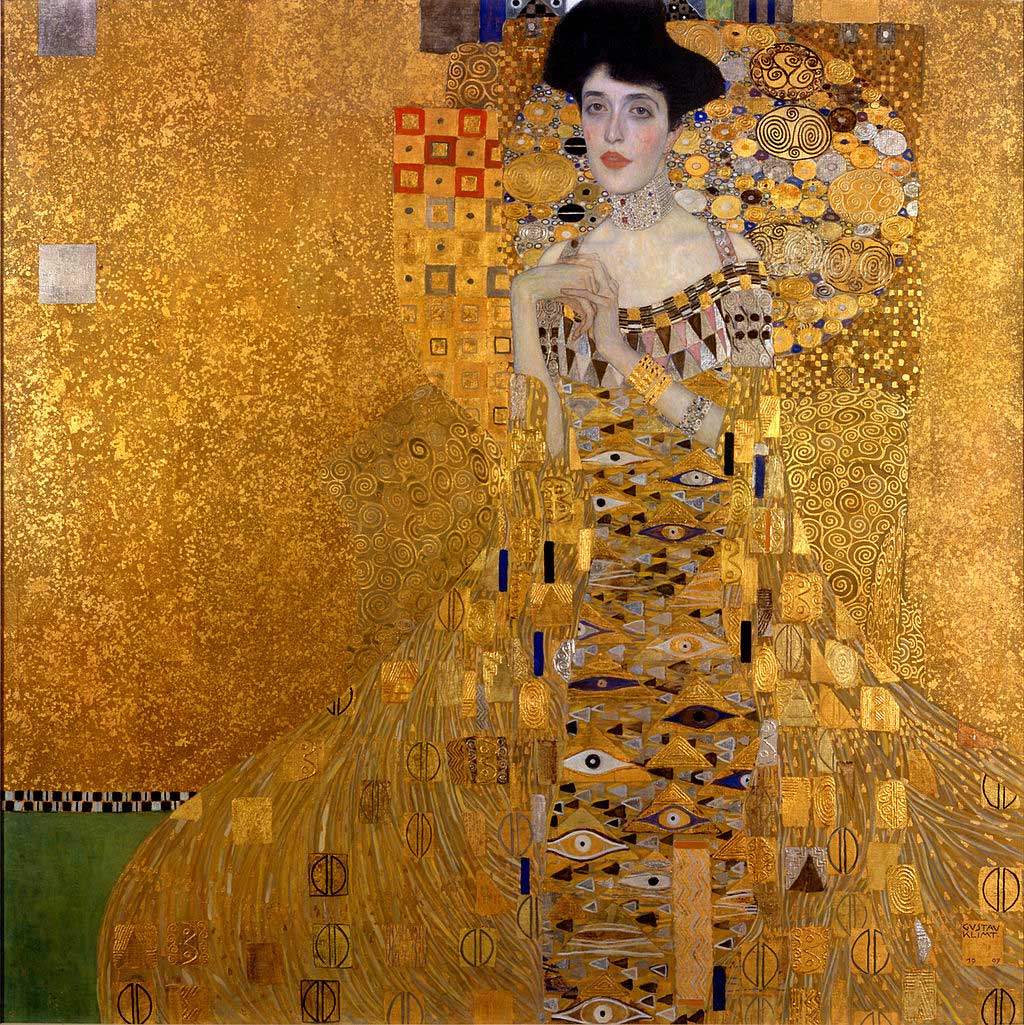
Bildnis der Adele Bloch-Bauer I 1907 Danae 1907 Dame mit Hut und Federboa 1909 Alte Frau 1909 Die Familie 1909 Judith II (Salome) 1909
Der Schwarze Federhut 1910 Dame mit Rosenhut 1910 Bildnis der Adele Bloch-Bauer II 1912 Bildnis der Mäda Primavesi 1912 Bildnis der Paula Zuckerkandl 1912 Ria Munk am Totenbett (Ria Munk I) 1912
Mädchenbildnis 1912 Bildnis der Eugenia Primavesi 1913 Die Jungfrau 1913 Bildnis der Barbara Flöge (Mutter der Emilie Flöge) 1915 Bildnis der Charlotte Pulitzer 1915 Backfisch 1916
ContentAd #1
ContentAd #3
sponsored by watch2pay
 
  • Contact
  • Imprint
  • Sitemap
  • Terms of Use
Copyright ©2013 LAKS GmbH. All rights reserved. |  Gustav Klimt Paintings
Follow klimt.com

Newsletter sign-up Sign up to our newsletter for unique offers and the latest news on products, rides and events