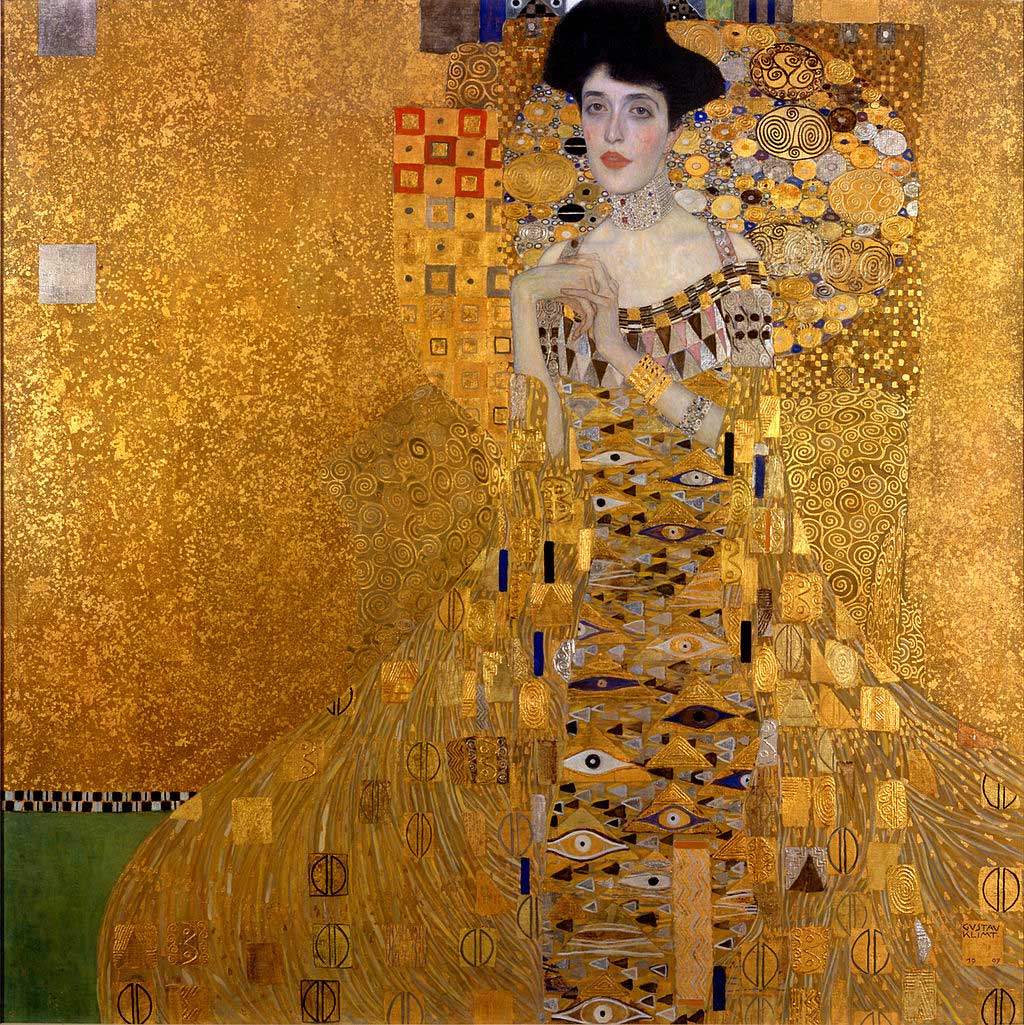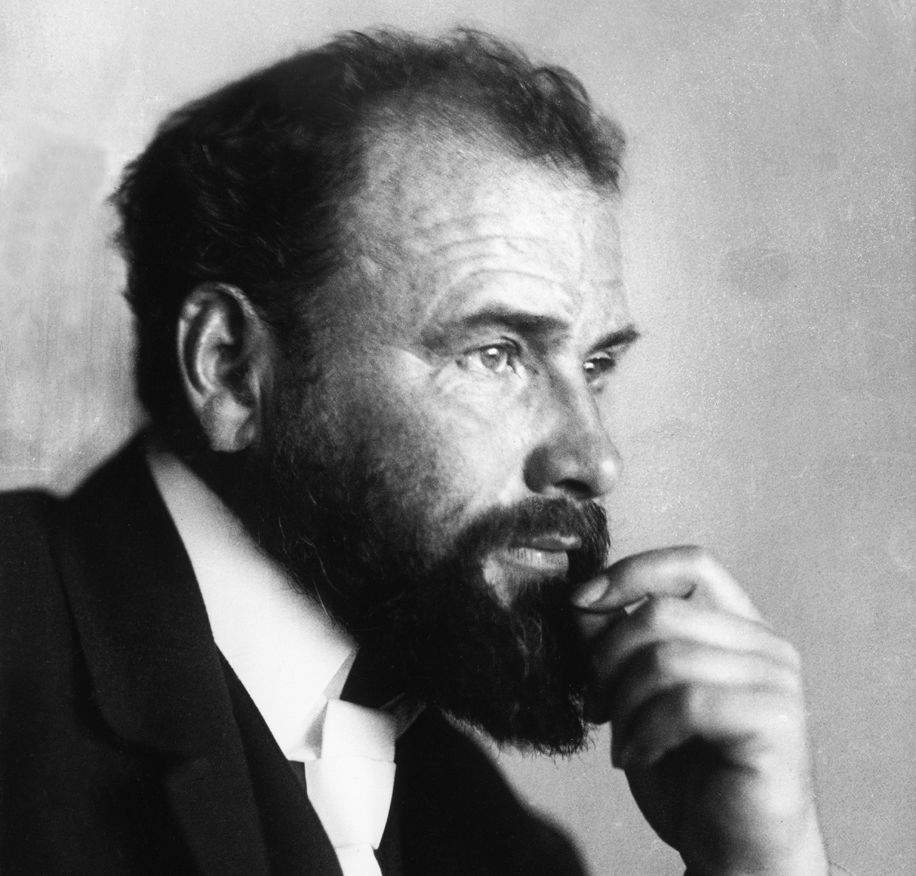

KLIMT.com - the virtual Gustav Klimt - MuseumKlimt.com is virtual Klimt Museum displaying paintings by Gustav Klimt, Gustav Klimt drawings, study drawings by Gustav Klimt, Klimt portrait paintings, Early and Late Klimt Artworks and Klimt photographs.

  • Gallery
    • Early Works
    • Beethoven-Frieze
    • Stoclet-Frieze
    • Landscapes
    • Lake Attersee
    • Women
    • Late Works
    • Drawings 1
    • Drawings 2
    • Photographies
  • Biography
    • 1862 - 1890
    • 1891 - 1898
    • 1899 - 1910
    • 1911 - 1918
    • 1918 - 2012
  • Vienna
    • About Vienna
    • Exhibitions
    • Eat and Drink
  • Products
  • Contact

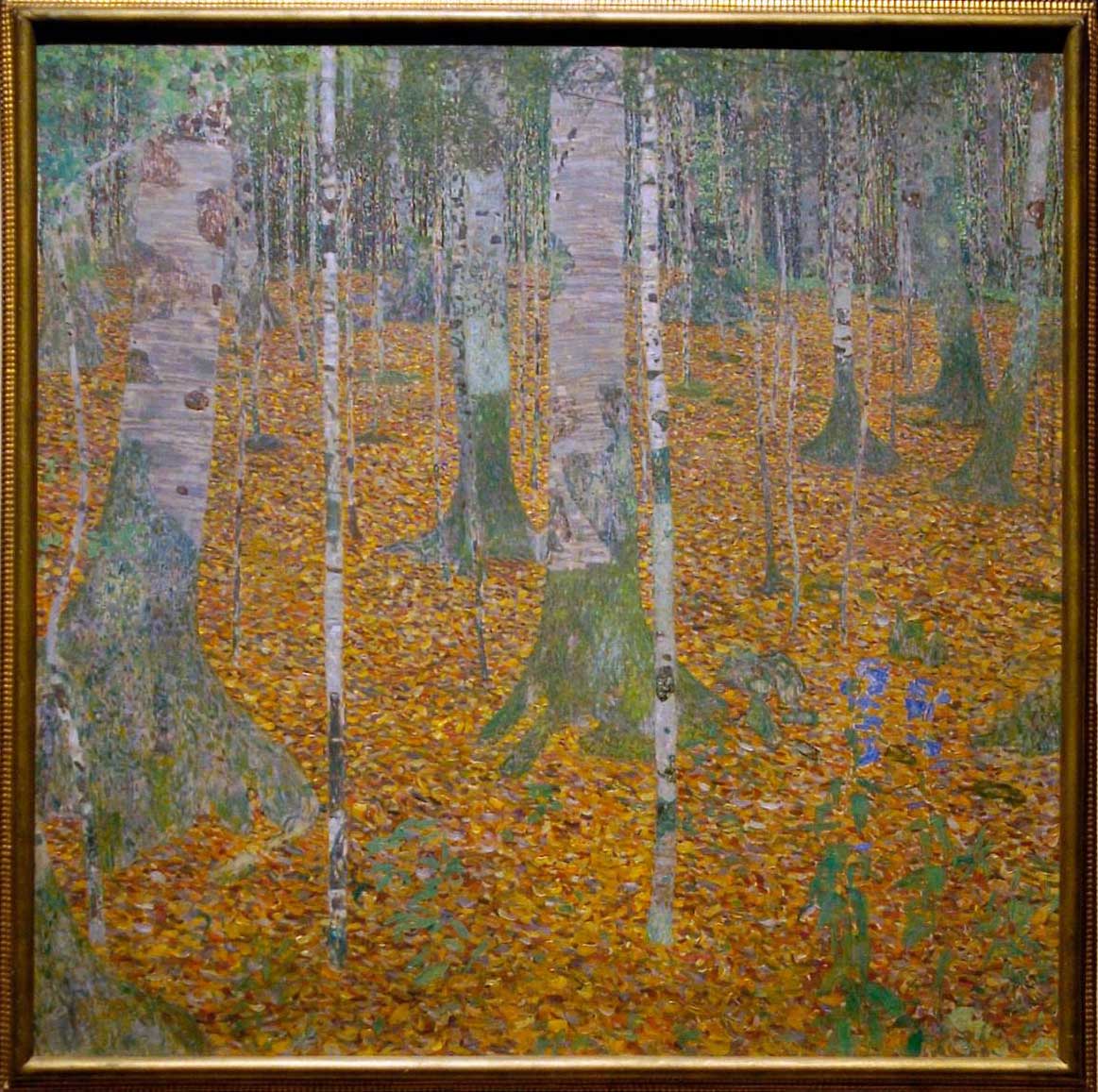
Bauernhaus in Buchberg 1911

back
Bauernhaus in Buchberg 1911

Farm House in Buchberg

Measures: 110 x 110 cm
Technique: Oil on canvas
Depository: Österreichische Galerie Belvedere, Vienna

Framed by the tree trunks and the foliated tree crowns, the distance to the farmhouse appears very short. The richly and detailed ornamented nature stands in contrast with the rather plain surface of the farmhouse.


Upper Austria (Austro-Bavarian: Obaöstarreich) is one of the nine States of Austria|states or Bundesländer of Austria. Its capital is Linz. Upper Austria borders on Germany and the Czech Republic, as well as on the other Austrian states of Lower Austria, Styria (state)|Styria, and Salzburg (state)|Salzburg. With an area of 11,980 km² and 1.412 million inhabitants, Upper Austria is the fourth-largest Austrian state by land area and third-largest by population.

History


Origins
For a long period of the Middle Ages, much of Upper Austria belonged to the Duchy of Styria. In the mid 13th century the Traungau was removed from it by King Ottokar II of Bohemia, and it became known as the Principality above the Enns River, this name being first recorded in 1264. (At the time the term "Upper Austria" also included Tyrol and various scattered Habsburg possessions in South Germany.) In 1490, the area was given a measure of independence within the Holy Roman Empire, with the status of a principality. By 1550 there was a Protestant majority. In 1564, Upper Austria, together with Lower Austria and the Bohemian territories, fell under Holy Roman Emperor Maximilian II. At the start of the 17th century the counter-reformation was instituted under Emperor Rudolf II and his successor Matthias. After a military campaign, the area was under the control of Bavaria for some years in the early 17th century. The Innviertel was ceded from the Duchy of Bavaria to Upper Austria in the Treaty of Teschen in 1779. During the Napoleonic Wars, Upper Austria was occupied by the French army on more than one occasion.

Present day
In 1918, after the collapse of Austria-Hungary, the name Oberösterreich was used to describe the province of the new Austria. After Austria was annexed by Adolf Hitler, Upper Austria became Reichsgau Oberdonau, although this also included the southern part of the Sudetenland, annexed from Czechoslovakia, and a small part of Styria. In 1945, Upper Austria was partitioned between the American zone to the south and the Soviet zone to the north.

back to gallery previous picture next picture
Ein Morgen am Teiche 1899 Attersee 1900 Bauernhaus in Kammer am Attersee (Mühle) 1901 Insel im Attersee 1902 Schloss Kammer am Attersee I (Wasserschloss) 1908 Schloss Kammer am Attersee II 1909
Schloss Kammer am Attersee III 1910 Schloss Kammer am Attersee IV 1910 Bauernhaus in Buchberg 1911 Allee im Park von Schloss Kammer 1912 Forsthaus in Weissenbach I 1914 Forsthaus in Weissenbach II 1914
Litzlberg am Attersee 1914 Litzlbergkeller am Attersee 1915 Häuser in Unterach am Attersee 1916 Kirche in Unterach am Attersee 1916 Unterach am Attersee 1916 Holzknechthaus in Weissenbach 1916
ContentAd #1
ContentAd #3
sponsored by watch2pay
 
  • Contact
  • Imprint
  • Sitemap
  • Terms of Use
Copyright ©2013 LAKS GmbH. All rights reserved. |  Gustav Klimt Paintings
Follow klimt.com

Newsletter sign-up Sign up to our newsletter for unique offers and the latest news on products, rides and events