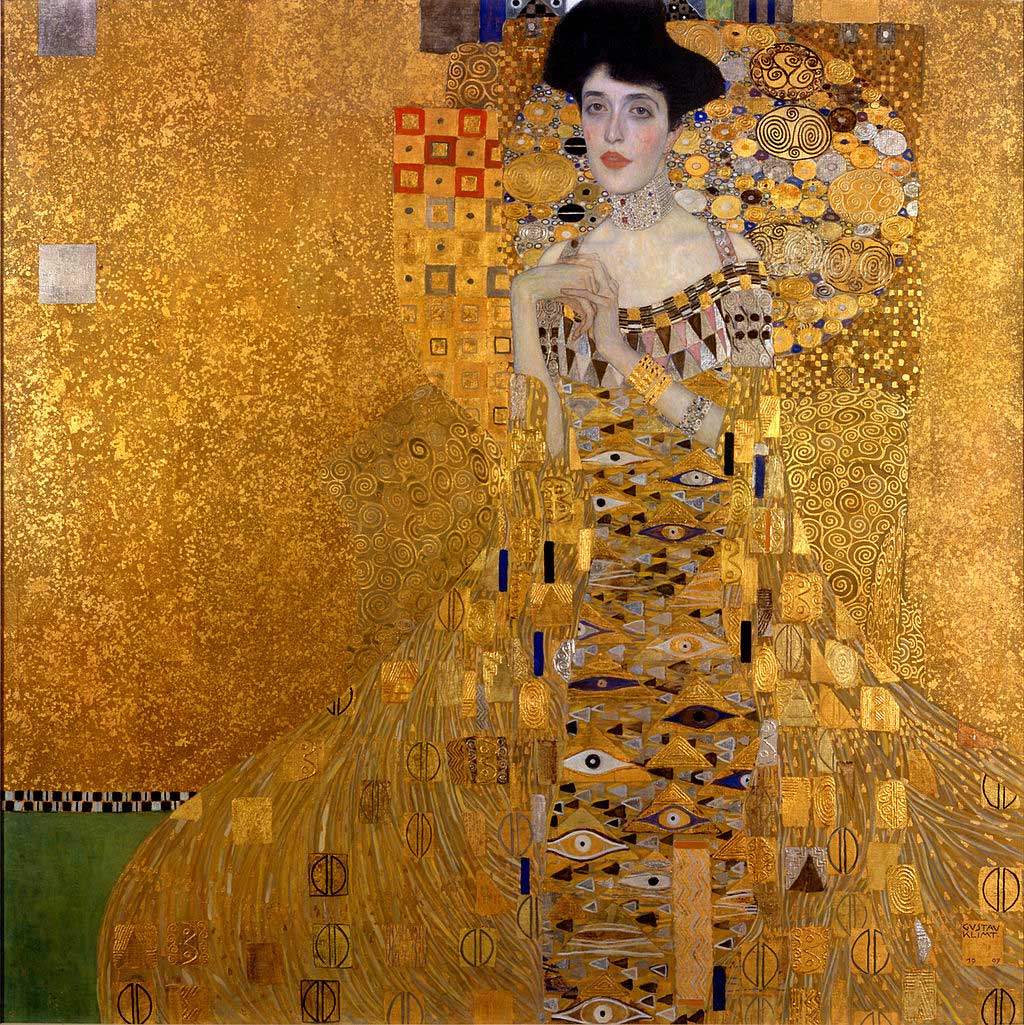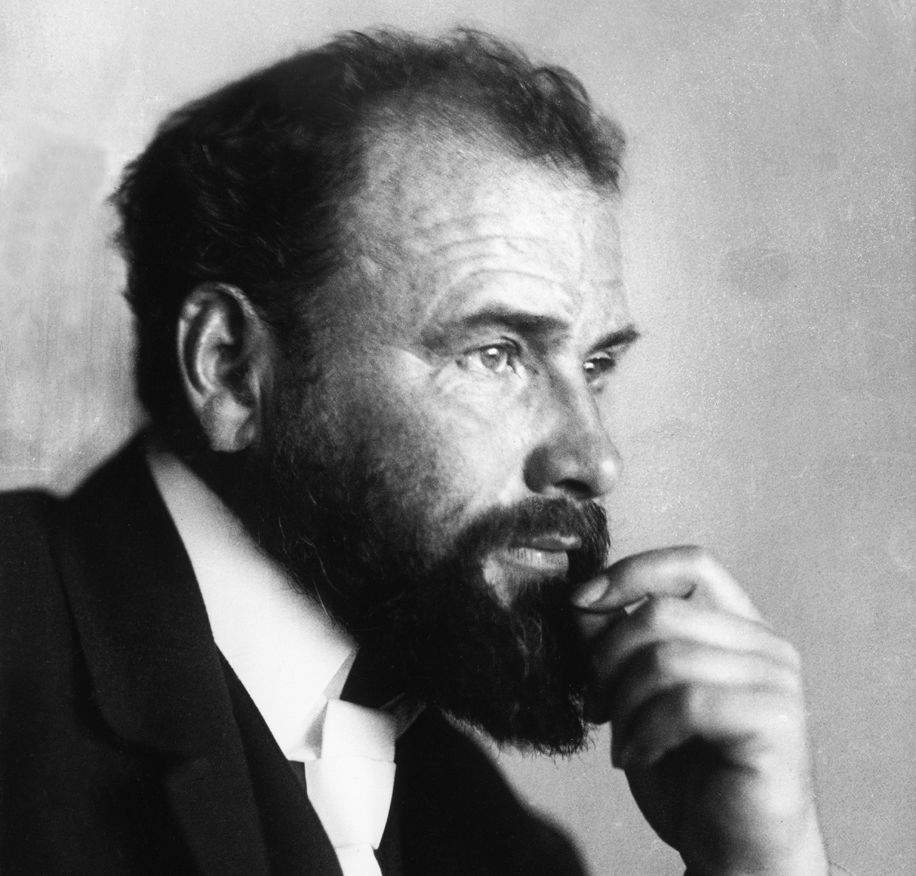

KLIMT.com - the virtual Gustav Klimt - MuseumKlimt.com is virtual Klimt Museum displaying paintings by Gustav Klimt, Gustav Klimt drawings, study drawings by Gustav Klimt, Klimt portrait paintings, Early and Late Klimt Artworks and Klimt photographs.

  • Gallery
    • Early Works
    • Beethoven-Frieze
    • Stoclet-Frieze
    • Landscapes
    • Lake Attersee
    • Women
    • Late Works
    • Drawings 1
    • Drawings 2
    • Photographies
  • Biography
    • 1862 - 1890
    • 1891 - 1898
    • 1899 - 1910
    • 1911 - 1918
    • 1918 - 2012
  • Vienna
    • About Vienna
    • Exhibitions
    • Eat and Drink
  • Products
  • Contact

Zwei stehende Mädchen, Blätter in den Händen haltend (Studie für 'Schubert am Klavier') 1896

back
Zwei stehende Mädchen, Blätter in den Händen haltend (Studie für 'Schubert am Klavier') 1896

Two girls standing, holding sheets in their hands (Study for "Schubert at the Piano")

Franz Peter Schubert (; 31 January 179719 November 1828) was an Austrian composer. Although he died at the age of 31, Schubert was a prolific composer, having written some 600 Lieder, nine symphonies (including the famous "Symphony No. 8 (Schubert)|Unfinished Symphony"), liturgy|liturgical music, operas, some incidental music, and a large body of chamber music|chamber and solo piano music. Appreciation of Schubert's music during his lifetime was limited, but interest in his work increased significantly in the decades following his death. Franz Liszt, Robert Schumann, Johannes Brahms and Felix Mendelssohn, among others, discovered and championed his works in the 19th century. Today, Schubert is seen as one of the leading exponents of the early Romantic music|Romantic era in music and he remains one of the most frequently performed composers.

Biography
with insulting and opprobrious language".#GibbsLife|Gibbs (2000), p. 67 While Schubert never saw Senn again, he did set some of his poems, "Selige Welt" and "Schwanengesang", to music. The incident may have played a role in a falling-out with Mayrhofer, with whom he was living at the time.#GibbsLife|Gibbs (2000), p. 68 He was nicknamed "Schwämmerl" by his friends, which Gibbs describes as translating to "Tubby" or "Little Mushroom". "Schwammerl" is Austrian (and other) dialect for mushroom; the umlaut makes it a diminutive.

Musical maturity
The compositions of 1819 and 1820 show a marked advance in development and maturity of style. The unfinished oratorio "Lazarus" (D. 689) was begun in February; later followed, amid a number of smaller works, by the 23rd Psalm (D. 706), the Gesang der Geister (D. 705/714), the Quartettsatz (Schubert)|Quartettsatz in C minor (D. 703), and the "Wanderer Fantasy" for piano (D. 760). Of most notable interest is the staging in 1820 of two of Schubert's operas: Die Zwillingsbrüder (D. 647) appeared at the Theater am Kärntnertor on June 14, and Die Zauberharfe (D. 644) appeared at the Theater an der Wien on August 21.#Austin|Austin (1873), pp. 46–47 Hitherto, his larger compositions (apart from his masses) had been restricted to the amateur orchestra at the Gundelhof, a society which grew out of the quartet-parties at his home. Now he began to assume a more prominent position, addressing a wider public. Publishers, however, remained distant, with Anton Diabelli hesitantly agreeing to print some of his works on commission.#Wilberforce|Wilberforce (1866), pp. 90–92 The first seven opus numbers (all songs) appeared on these terms; then the commission ceased, and he began to receive the meager pittances which were all that the great publishing houses ever paid him. The situation improved somewhat in March 1821 when Vogl sang "Der Erlkönig" at a concert that was extremely well received.#Wilberforce|Wilberforce (1866), p. 25 That month, Schubert composed a variation on a waltz by Anton Diabelli (D. 718), being one of the fifty composers who contributed to Vaterländischer Künstlerverein. , D. 960 (composed in 1828) |description|played by Randolph Hokanson |filename=Schubert - Piano Sonatas - 5 Moderato.ogg|title=1. Molto moderato|description=|format=Ogg |filename2=Schubert - Piano Sonatas - 6 Andante.ogg|title2=2. Andante sostenuto|description2=|format2=Ogg |filename3=Schubert - Piano Sonatas - 7 Scherzo.ogg|title3=3. Scherzo. Allegro vivace con delicatezza|description3=|format3=Ogg |filename4=Schubert - Piano Sonatas - 8 Allegro.ogg|title4=4. Allegro, ma non troppo|description4=Performed by Randolph Hokanson|format4=Ogg }} The production of the two operas turned Schubert's attention more firmly than ever in the direction of the stage, where, for a variety of reasons, he was almost completely unsuccessful. All in all, he produced seventeen stage works, each of them failures which were quickly forgotten. In 1822, Alfonso und Estrella was refused, partly owing to its libretto.#Newbould|Newbould (1999), p. 173 Fierrabras (opera)|Fierrabras (D. 796) was rejected in the fall of 1823, but this was largely due to the popularity of Rossini and the Italian operatic style, and the failure of Carl Maria von Weber's Euryanthe.#CambridgeCompanion|Gibbs (1997), p. 228 Die Verschworenen (The Conspirators, D. 787) was prohibited by the censor (apparently on the grounds of its title),#GibbsLife|Gibbs (2000), p. 111 and Rosamunde (D. 797) was withdrawn after two nights, owing to the poor quality of the play for which Schubert had written incidental music. Of these works, the two former are written on a scale which would make their performances exceedingly difficult (Fierrabras, for instance, contains over 1,000 pages of manuscript score), but Die Verschworenen is a bright attractive comedy, and Rosamunde contains some of the most charming music that Schubert ever composed. In 1822, he made the acquaintance of both Weber and Ludwig van Beethoven|Beethoven, but little came of it in either case. Beethoven is said to have acknowledged the younger man's gifts on a few occasions, but some of this is likely legend and in any case he could not have known the real scope of Schubert's music – especially not the instrumental works – as so little of it was printed or performed in the composer's lifetime. On his deathbed, Beethoven is said to have looked into some of the younger man's works and exclaimed, "Truly, the spark of divine genius resides in this Schubert!"#Thayer|Thayer, pp. 299–300 but what would have come of it if he had recovered we can never know. In the autumn of 1822, Schubert embarked suddenly on a work which more decisively than almost any other in those years showed his maturing personal vision, the "Symphony No. 8 (Schubert)|Unfinished Symphony" in B minor. The reason he left it unfinished after two movements and sketches some way into a third remains an enigma, and it is also remarkable that he did not mention it to any of his friends even though, as Brian Newbould notes, he must have felt thrilled by what he was achieving.

Last years and masterworks
In 1823 Schubert, in addition to Fierrabras, also wrote his first song cycle, Die schöne Müllerin (D. 795), setting poems by Wilhelm Müller.#Newbould|Newbould (1999), p. 215 This series, together with the later cycle "Winterreise" (D. 911, also setting texts of Müller in 1827) is widely considered one of the pinnacles of Lieder. He also composed the song Du bist die Ruh ("You are stillness/peace") D. 776 during this year. Also in that year, symptoms of syphilis first appeared.#Newbould|Newbould (1999), p. 210 In the spring of 1824 he wrote the Octet (Schubert)|Octet in F (D. 803), "A Sketch for a Grand Symphony"; and in the summer went back to Zseliz. There he became attracted to Hungary|Hungarian musical idiom, and wrote the Divertissement à la hongroise (D. 818) for piano duet and the String Quartet No. 13 (Schubert)|String Quartet in A minor (D. 804). It has been said that he held a hopeless passion for his pupil, the Countess Karoline Eszterházy, but the only work he dedicated to her was his Fantasia in F minor for piano four-hands|Fantasie in F minor (D. 940) for piano duet.#Newbould|Newbould (1999), p. 218 His friend Eduard von Bauernfeld|Bauernfeld penned the following verse, which appears to reference Schubert's unrequited sentiments:

In love with a Countess of youthful grace,
—A pupil of Galt's; in desperate case
Young Schubert surrenders himself to another,
And fain would avoid such affectionate pother#Duncan|Duncan (1905), p. 99
Despite his preoccupation with the stage, and later with his official duties, he found time during these years for a significant amount of composition. He completed the :fr:Messe n°5 (Schubert)|Mass in A flat (fr) (D. 678) and, in 1822, began the "Unfinished Symphony" (Symphony No. 8 (Schubert)|Symphony No. 8 in B minor, D. 759). Why the symphony was "unfinished" has been debated endlessly without resolution. In 1824, he wrote the variations for flute and piano on "Trockne Blumen", from the cycle Die schöne Müllerin, and several string quartets. He also wrote the Arpeggione Sonata (Schubert)|Arpeggione Sonata (D. 821), at a time when there was a minor craze over arpeggione|that instrument.#Newbould|Newbould (1999), pp. 221–225 The setbacks of previous years were compensated for by the prosperity and happiness of 1825. Publication had been moving more rapidly; the stress of poverty was for a time lightened; and in the summer he had a pleasant holiday in Upper Austria, where he was welcomed with enthusiasm. It was during this tour that he produced his "Songs from Sir Walter Scott". This cycle contains Ellens dritter Gesang (D. 839), a setting of Adam Storck's German translation of Walter Scott|Scott's hymn from The Lady of the Lake, which is widely, though mistakenly, referred to as "Schubert's Ave Maria". It opens with the greeting Ave Maria, which recurs in the refrain; the entire Scott/Storck text in Schubert's song is frequently substituted with the complete Latin text of the traditional Hail Mary|Ave Maria prayer.#Emmons|Emmons, p. 38 In 1825, Schubert also wrote the Piano Sonata in A minor, D. 845 (Schubert)|Piano Sonata in A minor (Op. 42, D. 845), and began the "Great" C major Symphony (Symphony No. 9 (Schubert)|Symphony No. 9, D. 944), which was completed the following year.#Newbould|Newbould (1999), p. 228 From 1826 to 1828, Schubert resided continuously in Vienna, except for a brief visit to Graz, Austria|Graz in 1827. The history of his life during these three years was comparatively uninteresting, and is little more than a record of his compositions. In 1826, he dedicated Symphony No. 9 (Schubert)|a symphony (D. 944, that later came to be known as the "Great") to the Gesellschaft der Musikfreunde and received an honorarium in return.#Newbould|Newbould (1999), p. 254 In the spring of 1828, he gave, for the first and only time in his career, a public concert of his own works, which was very well received.#Newbould|Newbould (1999), pp. 265–266 The compositions themselves are a sufficient biography. The Death and the Maiden Quartet|String Quartet in D minor (D. 810), with the variations on "Death and the Maiden (song)|Death and the Maiden", was written during the winter of 1825–1826, and first played on 25 January 1826. Later in the year came the String Quartet No. 15 (Schubert)|String Quartet in G major, (D. 887, Op. 161), the "Rondeau brillant" for piano and violin (D. 895, Op. 70), and the Piano Sonata in G major, D. 894 (Schubert)|Piano Sonata in G (D. 894, Op. 78) (first published under the title "Fantasia in G"). To these should be added the three Shakespearian songs, of which "Hark! Hark! the Lark" (D. 889) and "An Sylvia" (D. 891) were allegedly written on the same day, the former at a tavern where he broke his afternoon's walk, the latter on his return to his lodging in the evening.#SmithCarlson|Smith & Carlson, p. 78 In 1827, Schubert wrote the song cycle Winterreise (D. 911), a colossal peak in art song ("remarkable" was the way it was described at the Schubertiades), the Fantasia for piano and violin in C (D. 934), the Impromptus (Schubert)|Impromptus for piano, and the two piano trios (Piano Trio No. 1 (Schubert)|the first in B flat (D. 898), and Piano Trio No. 2 (Schubert)|the second in E flat, D. 929);#Newbould|Newbould (1999) pp. 261–263 in 1828 the Mirjams Siegesgesang (Song of Miriam, D. 942) on a text by Franz Grillparzer, the Mass in E-flat (D. 950), the Tantum Ergo (D. 962) in the same key, the String Quintet (Schubert)|String Quintet in C (D. 956), the second Benedictus to the Mass in C, the Schubert's last sonatas|last three piano sonatas, and the collection of songs published posthumously as Schwanengesang ("Swan-song", D. 957).#Newbould|Newbould (1999) pp. 270–274 This collection, while not a true song cycle, retains a unity of style amongst the individual songs, touching depths of tragedy and of the morbidly supernatural which had rarely been plumbed by any composer in the century preceding it. Six of these are set to words by Heinrich Heine, whose Buch der Lieder appeared in the autumn. The Symphony No. 9 (Schubert)|Symphony No. 9 (D. 944) is dated 1828, but Schubert scholars believe that this symphony was largely written in 1825–1826 (being referred to while he was on holiday at Gastein in 1825 – that work, once considered lost, now is generally seen as an early stage of his C major symphony) and was revised for prospective performance in 1828. This huge, Beethovenian work was declared "unplayable" by a Viennese orchestra.#CambridgeCompanion|Gibbs (1997), p. 202 This was a fairly unusual practice for Schubert, for whom publication, let alone performance, was rarely contemplated for most of his larger-scale works during his lifetime. In the last weeks of his life, he began to sketch three movements for a new Symphony in D (D. 936A).#Newbould|Newbould (1999), p. 385 D. 935 No. 3|description = This Impromptus (Schubert)|Impromptu is a theme and variations based on a theme from Rosamunde. Performed by Randolph Hokanson.|pos=left|format = Ogg}} The works of his last two years reveal a composer increasingly meditating on the darker side of the human psyche and human relationships, and with a deeper sense of spiritual awareness and conception of the 'beyond'. He reaches extraordinary depths in several chillingly dark songs of this period, especially in the larger cycles. For example, the song Der Doppelgänger reaching an extraordinary climax, conveying madness at the realization of rejection and imminent death – a stark and visionary picture in sound and words that had been prefigured a year before by "Der Leiermann" (The Hurdy-Gurdy Man) at the end of Winterreise – and yet the composer is able to touch repose and communion with the infinite in the almost timeless ebb and flow of the String Quintet and his last three piano sonatas, moving between joyful, vibrant poetry and remote introspection. Even in large-scale works he was sometimes using increasingly sparse textures; Newbould compares his writing in the fragmentary Tenth Symphony (D. 936A), probably the work of his very last two months) with Gustav Mahler|Mahler's use of folksong-like harmonics and bare soundscapes.Newbould (1999) ibid, and comments in the liner notes to the cd recording issued on Hyperion Records Schubert expressed the wish, were he to survive his final illness, to further develop his knowledge of harmony and counterpoint, and had actually made appointments for lessons with the counterpoint master Simon Sechter.#Schonberg|Schonberg, p. 130

Final illness and death
In the midst of this creative activity, his health deteriorated. The cause of his death was officially diagnosed as typhoid fever, though other theories have been proposed, including the tertiary stage of syphilis.Brian Newbould, Schubert: The Music and the Man, UCLA Press, 1997, discusses Schubert's medical history and his death; leans toward Schubert's contracting syphilis in 1822 and dying from it, while judging the evidence not quite conclusive announcing the test for syphilis. By the late 1820s Schubert's health was failing and he confided to some friends that he feared that he was near death.Brian Newbould, 1999, on the medical evidence In the late summer of 1828, the composer saw court physician Ernst Rinna, who may have confirmed Schubert's suspicions that he was ill beyond cure and likely to die soon.Newbould ibid Some of his symptoms matched those of mercury poisoning (mercury (element)|mercury was then a common treatment for syphilis, again suggesting that Schubert suffered from it).#GibbsLife|Gibbs (2000), pp. 168–169 At the beginning of November he again fell ill, experiencing headaches, fever, swollen joints, and vomiting. He was generally unable to retain solid food and his condition worsened. Schubert died in Vienna, at age 31, on 19 November 1828, at the apartment of his brother Ferdinand. The last musical work he had wished to hear was Ludwig van Beethoven|Beethoven's String Quartet No. 14 (Beethoven)|String Quartet No. 14 in C sharp minor, Op. 131; his friend, violinist Karl Holz, who was present at the gathering, 5 days before Schubert's death, commented: "The King of Harmony has sent the King of Song a friendly bidding to the crossing".Deutsch O.E. Schubert: Memoirs by his friends, p. 300. London, 1959. It was next to Beethoven, whom he had admired all his life, that Schubert was buried by his own request, in the village cemetery of Währing. In 1872, a memorial to Franz Schubert was erected in Vienna's Stadtpark, Vienna|Stadtpark.#Duncan|Duncan (1905), pp. 79–80 In 1888, both Schubert's and Beethoven's graves were moved to the Zentralfriedhof, where they can now be found next to those of Johann Strauss II and Johannes Brahms.#GibbsLife|Gibbs (2000), p. 197 The cemetery in Währing was converted into a park in 1925, called the Schubert Park, and his former grave site was marked by a bust.

back to gallery previous picture next picture
Kopfstudie eines Mädchens, nach links geneigt 1879 Porträt eines Mannes mit Bart 1879 Porträt eines Mannes mit Bart im Dreiviertelprofil 1879 Porträt einer Frau , nach oben blickend 1880 Spiegelhaltender Engel und Kind als Dame verkleidet 1882 Spiegelhaltender Engel und Kind als Dame verkleidet - Mode 1882
Entwurf für die Reinzeichnung Oper 1883 Männerakt mit Stab 1885 Liegender männlicher Akt 1885 Tanzendes Mädchen 1885 Annerl - Brustbild eines kleinen Mädchens nach rechts 1885 Liegender weiblicher Akt (Studie für den 'Dionysosaltar' im Burgtheater) 1887
Kopfstudie eines liegenden Mädchens, zwei Handstudien (Studien für das 'Theater Shakespeares' im Burgtheater) 1887 Kopfstudie eines liegenden jungen Mannes, darunter Kopf im verlorenen Profil (Studien für das 'Theater Shakespeares' im Burgtheater) 1887 Brustbild eines Mannes im Dreiviertelprofil (Studie für 'Theater Shakespeares' im Burgtheater) 1887 Brustbild eines Mannes mit Mütze (Studie für 'Theater Shakespeares' im Burgtheater) 1887 Alter Mann mit Bart und Mütze im verlorenen Profil (Studie für 'Theater Shakespeares' im Burgtheater) 1887 Knabe im verlorenen Profil (Studie für das 'Theater Shakespeares' im Burgtheater) 1887
Kopf eines aufgestützt liegenden Mannes (Studie für das 'Theater in Taormina' im Burgtheater) 1887 Studie für die Deckenbilder im Burgtheater 1888 Profil und Rückenansicht eines Herrn mit Theaterglas, Skizze der rechten Hand (Studie für 'Zuschauerraum im alten Burgtheater') 1888 Die Sphinx mit dem Wissen, Erdkugel, Liebespaar, alter verzweifelter Mann 1898 Frau Heymann 1892 Dame mit Cape, Figurenstudie für 'Zuschauerraum im Schloss Eszterházy in Totis' 1893
Brustbild eines kleinen Mädchens von vorne (Studie für 'Liebe') 1895 Brustbild eines kahlköpfigen Mannes (Studie für 'Liebe') 1895 Zwei stehende Mädchen, Blätter in den Händen haltend (Studie für 'Schubert am Klavier') 1896 Skizze zu 'Allegorie der Skultpur' 1896 Brustbild eines lächelnden Mädchens 1896 Schwebende mit ausgestrecktem Arm (Studie für 'Medizin') 1896
Entwurf zur Tragödie 1897 Männlicher Rückenakt mit ausgebreiteten Armen (Studie und Wiederholung für 'Medizin') 1897 Schwebende mit einem hängenden und einem ausgestreckten Arm (Studie für 'Medizin') 1897 Schwebende mit ausgebreiteten Armen (Studie für 'Medizin') 1897 Zwei Studien eines stehenden Aktes mit ausgestrecktem Arm (Studie für 'Medizin') 1897 Stehender männlicher Akt mit erhobenem Arm (Studie für 'Medizin') 1897
Stehender weiblicher Akt (Studie für 'Medizin') 1897 Rückenakt eines Mannes (Studie für 'Philosophie') 1897 Denkende Frau (Studie für 'Philosophie') 1897 Stehender männlicher Rückenakt (Studie für 'Philosophie') 1897 Fliegender Dreifuss, Reinzeichnung 1897 Reinzeichnung für Initiale G 1897
Reinzeichnung eines Männerkopfes im Profil 1897 Bildnis einer jungen Dame lehnenseitig 1897 Dame im Lehnsessel (Studie zum Bildnis Sonja Knips) 1897 Junge Frau im Straßenkleid 1897 Fischblut 1898 Stehender weiblicher Akt mit erhobenem Arm 1898
Mädchenkopf mit langen Haaren im Halbprofil 1898 Studie für 'Schubert am Klavier' 1898 Mädchen mit langen Haaren 1898 Thaleia und Melpomene 1898 Studie zum Bildnis Serena Lederer (stehend von vorne, beide Hände an die Taille gelegt) 1898 Studie zum Bildnis Serena Lederer (etwas nach links stehend, mit herabhängenden Armen) 1898
Studie zum Bildnis Serena Lederer (stehend am Sessel gelehnt) 1898 Studie zum Bildnis Serena Lederer (stehend wenig nach links, mit eingebeugtem rechten Arm) 1898 Studie zum Bildnis Serena Lederer (stehend nach links, die rechte Hand erhoben) 1898 Übertragungsskizze für das Bildnis Serena Lederer (etwas nach links stehend) 1898 Kniender Akt einer alten Frau (Studie für 'Philosophie') 1898 Detailstudie eines Liebespaares, sitzender männlicher Rückenakt (Studie für 'Philosophie') 1899
Mädchen mit langen Haaren 1899 Aufgestützt sitzender weiblicher Akt, zwei ringende Männer (Studien für 'Medizin') 1900 Kopf eines alten Mannes, Fragment eines weiblichen Oberkörpers, weiblicher Rückenakt (Studien für 'Medizin') 1900 Fünf Studien eines schlafenden Kindes (Studien für 'Medizin') 1900 Weiblicher Rückenakt, verzweifelter alter Mann (Studien für 'Medizin') 1900 Sitzender männlicher Rückenakt, Detailstudie von Ringenden (Studie für 'Medizin') 1900
Zwei Ringende Männer (Zwei Skizzen und Detailstudie für 'Medizin') 1900 Zwei ringende Männer (Studie für 'Medizin') 1900 Zwei Studien eines ringenden Männerpaares (Studie für 'Medizin') 1900 Zwei Skelettstudien (Studie für 'Medizin') 1900 Zwei ringende Männer (Detailstudie für 'Medizin') 1900 Sitzender männlicher Rückenakt (Studie für 'Medizin'), Elefant, Aesculap 1900
Stehende Dame, auf einen Lehnstuhl gestützt (Studie für das Bildnis Rose von Rosthorn-Friedmann) 1900 Frauenakt 1901 Zwei Studien eines sitzenden weiblichen Rückenaktes 1901 Studie zur 'Poesie' im Beethovenfries 1901 Studie einer bekleideten Frau mit gefalteten Händen zum 'Mitleid' im Beethovenfries 1901 Zwei Kompositionsskizzen für die Gruppe der drei Gorgonen im Beethovenfries 1901
Studie für die rechte Figur der drei Grogonen im Beethovenfries 1901 Studie für die linke Figur der drei Gorgonen im Beethovenfries 1901 Studie für die linke der Gorgonen im Beethovenfries 1901 Studie für die linke der 'Drei Gorgonen' im Beethovenfries 1901 Stehender Frauenakt nach links und Frauenakt von vorne 1902 Mädchenakt von vorne 1902
Studie für die linke der 'Drei Gorgonen' im Beethovenfries 1902 Stehender Frauenakt von vorne, Studie für eine Gorgonenfigur im Beethoven Fries 1902 Studie eines Frauenkopfes im Drieviertelprofil (Studie für Unkeuschheit im Beethovenfries) 1902 Studie für die Figur 'Nagender Kummer' im Beethovenfries 1902 Studie zum knienden Männerakt der 'Schwachen Menschheit' im Beethovenfries 1902 Stehender Akt eines jungen Mädchens, Figurenstudie für 'Die schwache Menschheit' im Beethoven Fries 1902
Studie zur 'Poesie' im Beethovenfries 1902 Studie für das Liebespaar im Beethovenfries 1902 Zwei Studien für die schwebenden Gestalten der 'Sehnsucht nach Glück' im Beethovenfries 1902 Studie zu Irrlichter 1902 Seitenansicht eines bekleideten Skeletts (Studie für 'Hoffnung I') 1902 Akt einer Schwangeren im Profil, Wiederholung der Figur (Studie für 'Hoffung I') 1902
Frauenkopf, nach links geneigt, die Hände an die Wange gelegt (Studie für 'Jurisprudenz') 1902 Sitzender männlicher Rückenakt (Studie für 'Medizin') 1902 Studie für 'Hygieia' in 'Medizin' 1902 Kniestück eines Mannes in langem Gewand nach rechts 1903 Stehende alte Frau im Profil nach links 1903 Sitzende Dame im Fauteuil, Studie für das Porträt 'Adele Bloch-Bauer' 1903
Kostümstudie für 'Kirchliche Musik' im Stadttheater in Fiume 1903 Stehende mit Schwert in der erhobenen Rechten 1903 Studie für das Porträt 'Adele Bloch-Bauer I' 1903 Gustav Klimt, Secession, XVIII. Ausstellung 1903 Zwei Studien einer sitzenden Dame im langen Kleid, Studie für das Bildnis 'Adele Bloch-Bauer' 1903 Stehende Dame in Straßentoilette nach links 1903
Sitzender Akt mit langem Haar und schleierartigen Gewand 1904 Mann mit langem Gewand von vorne 1904 Mann mit Toga sich verneigend 1904 Ruhender Halbakt 1904 Schwangere mit Mann 1904 Liegender Halbakt mit erhobenem rechten Bein 1904
Zwei sich umarmende Mädchen, Figurenstudie zu 'Wasserschlangen I' 1904 Liegender Halbakt (Studie für 'Wasserschlangen II', 1. Zustand) 1904 Sitzende alte Frau 1904 Profilbildnis einer Frau mit Hut 1904 Mutter mit Kind (Studie und Detailskizze für 'Die Drei Lebensalter') 1904 Kleines Kind, von zwei Händen gehalten (Figur- und Detailstudien für 'Die Drei Lebensalter') 1904
Zwei Studien eines Säuglings (Studien für 'Die drei Lebensalter') 1904 Zwei Studien eines hochgehaltenen Kindes (Studie für 'Die drei Lebensalter') 1904 Stehende ältere Frau im Profil (Studie für 'Die drei Lebensalter') 1904 Studie eines hochgehaltenen schlafenden Kindes (Studie für 'Die drei Lebensalter') 1904 Halbakt eines Mädchens in Hosen 1904 Sitzender weiblicher Halbakt nach links 1904
Stehende Dame mit Umhang (Studie zum Bildnis Margaret Stonborough-Wittgenstein) 1904 Stehende Dame mit herabhängenden Armen (Studie für das Bildnis Margarethe Stonborough-Wittgenstein) 1904 Stehende Dame, die Hände ineinandergelegt (Studie für das Bildnis Margarethe Stonborough-Wittgenstein) 1904 Stehender Mann, eine Last tragend 1904 Sitzende Dame (Studie für das Bildnis Fritza Riedler) 1904 Studie für das Bildnis von Magda Mautner-Markhof 1904
Liegender weiblicher Halbakt 1905 Sitzende alte Frau im Profil nach links 1905 Zwei auf dem Bauch liegende Aktfiguren (Studie für 'Wasserschlangen II') 1905 Stehender Frauenakt mit erhobenem rechten Arm 1905 Stehender Frauenakt mit erhobenen Armen 1905 Weiblicher Akt mit angezogenen Schenkeln, Studie für 'Danae' 1905
ContentAd #1
ContentAd #3
sponsored by watch2pay
 
  • Contact
  • Imprint
  • Sitemap
  • Terms of Use
Copyright ©2013 LAKS GmbH. All rights reserved. |  Gustav Klimt Paintings
Follow klimt.com

Newsletter sign-up Sign up to our newsletter for unique offers and the latest news on products, rides and events