
KLIMT.com - the virtual Gustav Klimt - MuseumKlimt.com is virtual Klimt Museum displaying paintings by Gustav Klimt, Gustav Klimt drawings, study drawings by Gustav Klimt, Klimt portrait paintings, Early and Late Klimt Artworks and Klimt photographs.

  • Gallery
    • Early Works
    • Beethoven-Frieze
    • Stoclet-Frieze
    • Landscapes
    • Lake Attersee
    • Women
    • Late Works
    • Drawings 1
    • Drawings 2
    • Photographies
  • Biography
    • 1862 - 1890
    • 1891 - 1898
    • 1899 - 1910
    • 1911 - 1918
    • 1918 - 2012
  • Vienna
    • About Vienna
    • Exhibitions
    • Eat and Drink
  • Products
  • Contact

Biography

  • ALL
  • 1862 - 1890
  • 1891 - 1898
  • 1899 - 1910
  • 1911 - 1918
  • 1918 - 2012

Bildnis der Mäda Primavesi 1912

Portrait of Mäda Primavesi

Measures: 149,9 x 110,5 cm
Technique: Oil on canvas
Depository: Metropolitan Museum of Art, New York

Mäda Primavesi was the daughter of the banker and industrialist Otto Primavesi, one of the financial backers of the Wiener Werkstätte, and the actress Eugenia Primavesi (born Butschek), whom Klimt painted in 1913. A series of preliminary pencil sketches for Mäda's portrait, now in public and private collections, show that the composition evolved as the artist experimented with alternative poses and background motifs.

Established in 1903, the Wiener Werkstätte (engl.: Vienna Workshop) was a production community of visual artists. The workshop brought together architects, artists and designers whose first commitment was to design art which would be accessible to everyone. The work most representative of the Wiener Werkstätte is probably the Stoclet Palace in Brussels. Wiener Werkstätte was established in 1903, as a production community of architects, artists and designers whose first commitment was to design art which would be accessible to everyone. The enterprise evolved from the Vienna Secession, founded in 1897 as a progressive alliance of artists and designers. From the start, the Secession had placed special emphasis on the applied arts, and its 1900 exhibition surveying the work of contemporary European design workshops prompted the young architect Josef Hoffmann and his artist friend Koloman Moser to consider establishing a similar enterprise. Finally in 1903, with backing from the industrialist Fritz Wärndorfer, the Wiener Werkstätte began operations in three small rooms, it soon expanded to fill a three-story building with separate, specially designed facilities for metalwork, leatherwork, bookbinding, woodworking and a paint shop. The undertaking had a clear aim: to make all facets of human life into one unified work of art. This began with the creation of extraordinarily advanced working conditions for the craftsmen, and it ended with the wish to create everything entirely anew for everyday practical use or decoration. It was also decided to approve objects of outstanding individuality and beauty, and with emphasis on fine craftsmanship. This followed the organisation's motto: "Better to work 10 days on one product than to manufacture 10 products in one day." The seat of the venture was in Neustiftgasse 32-34, where a new building was adapted to their requirements, the project eventually exhausted Wärndorfer's fortune. The enthusiasm with which the key figures threw themselves into exhibitions and fairs. With the encouragement of a well-wishing press the Wiener Werkstatte quickly gained an excellent and widespread reputation. The duo Hoffmann and Moser complemented each other so well, that for a time it was impossible to differentiate between their designs. The circle of customers of the Wiener Werkstatte and Josef Hoffmann's mainly consisted of artists and the open-minded, progressive and financially well-to-do Jewish upper middle class supporters of the Austro-Hungarian Empire. Most of the objects produced in the Wiener Werkstatte were stamped with a number of different marks; the trademark of the Wiener Werkstatte, the monogram of the designer and that of the craftsman, who created it. The Wiener Werkstatte had about 100 employees in 1905, of whom 37 were masters of their trade. Branches were opened in; Karlsbad 1909, Marienbad, Zürich 1916/17, New York 1922, Berlin 1929. The Wiener Werkstätte's first years were heady times, during which the collaboration between Hoffmann and Moser reached its peak. The two artists created a geometric style whose functional simplicity anticipates later modernism and has influenced the work of many of today's leading designers and architects. Josef Hoffmann's significance as an early industrial designer for bentwood furniture can hardly be overestimated. He designed a furniture line noted for its simple forms and timeless elegance for the firm of Jacob & Josef Kohn. In architectural commissions such as the Purkersdorf Sanatorium and the lavish Palais Stoclet in Brussels, the Wiener Werkstätte was able to realize its ideal of the Gesamtkunstwerk (total artwork), a coordinated environment in which everything down to the last teaspoon was consciously designed as an integral part of the whole project. For several years, beginning in 1904, the Wiener Werkstätte had its own carpentry workshop. But only few pieces of furniture were made there. Most of the furniture known as Wiener Werkstätte Furniture were made by such excellent cabinet-makers as: Portois & Fix, Johann Soulek, Anton Herrgesell, Anton Pospisil, Friedrich Otto Schmidt and Johann Niedermoser. Some historians now believe that there are no existing original products of the Wiener Werkstätte Furniture division. From 1905, the Wiener Werkstatte produced handpainted and printed silks. The Backhausen firm was responsible for the machine-printed and woven textiles. It was during this period that Berthold Löffler and Carl Otto Czeschka, who both became associated with the Werkstätte and brought with them a renewed interest in figuration that had direct bearing on the early work of the Expressionist Oskar Kokoschka. The range of product lines also included; leather goods, enamel, jewellery, postcards and ceramics. The Wiener Werkstätte even had a millinery department. In 1907, the Wiener Werkstätte took over distribution for the Wiener Keramik, a ceramics workshop of kindred spirit headed by Michael Powolny and Berthold Löffler. And in the same year Moser, embittered by the financial squabbling, left the Wiener Werkstätte, which subsequently entered a new phase, both stylistically and economically. The founding of textile and fashion divisions in 1909 and 1910 brought a further shift in the Wiener Werkstätte's emphasis—away from the architectural and toward the ephemeral. After a close brush with bankruptcy in 1913, Wärndorfer was shipped off to America and the following year Otto Primavesi, a banker from Moravia, took over as chief financier and patron. The need for a perennial Milchkuh (cash cow) to provide a steady cash flow is often cited as symptomatic of the Wiener Werkstätte's economic naiveté, but in fact, the notion of an enlightened patron was central to the Werkstätte's operating philosophy. During and immediately following the First World War the Wiener Werkstatte was influenced by a new generation of artists and craftsmen. It was Dagobert Peche whose ornamental, almost baroque fancies exerted the most palpable influence. After the war, material shortages encouraged experimentation with less durable, less expensive materials such as wood, ceramics and papier-mâché. The original, grand Gesamtkunstwerk vision became diluted and submerged by the Kunstgewerbliches—the artsy-craftsy. The complete impoverishment of the truncated Austro-Hungarian Empire after World War I, undoubtedly played a significant role in the demise of the Wiener Werkstätte. Attempts to expand the workshop's scope—adding such items as wallpaper to its limited program of industrial licenses, and establishing branches in Berlin, New York and Zurich—were not particularly successful. The Werkstätte recognized early on that its role was not to reach the masses, but rather to create a rarefied environment for the wealthy few. So long as the Austro-Hungarian empire survived, whole and thriving, this goal was not particularly unrealistic. The Werkstätte's financial situation grew desperate due to the effects of the war and the onset of the world wide Depression in 1929. The situation was exacerbated by the rise of the Nazi party in the German Reichstag elections of September 1930 when the Nazis won 18.3% of the vote, and became the second-largest party in the Reichstag. On 20 July 1932, the Prussian government was ousted by a coup, known as the Preussenschlag, and a few days later at the July 1932 Reichstag election the Nazis polled 37.4 % of the vote and thus become, by a wide margin, the largest party in the Reichstag. Thereafter, the Nazi party's influence grew and the negative pressure the party brought to bear on the clients and supporters of the Werkstätte resulted in the liquidation of all of its assets the same year.

Artists of the Wiener Werkstaette


Architecture, interior design and furniture
Works designed by Josef Hoffmann, Mathilde Flögl, Carl Witzmann, Carl Breuer, Gustav Siegel, Emanuel Josef Margold, Koloman Moser, Dagobert Peche, Josef Urban, Otto Prutscher, Richard Luksch, Oswald Haerdtl, Phillipp Häusler, Carl Otto Czeschka :de:Carl Otto Czeschka and Victor Lurje. Although not part of the Wiener Werkstätte, the German-born artist and architect Winold Reiss was influenced especially by the work of Josef Hoffmann.

Metalwork
Works designed by Karl Hagenauer, Josef Hoffmann, Berthold Löffler, Franz Metzner, Koloman Moser, Dagobert Peche, Otto Prutscher, Max Snischeck, Josef Urban and Julius Zimpel.

Ceramics
Works designed by Gudrun Baudisch, Josef Hoffmann, Hilda Jesser, Dina Kühn, Berthold Löffler, Dagobert Peche, Richard Luksch, Jutta Sika, Susi Singer and Vally Wieselthier.

Glass
Works designed by Josef Hoffmann, Robert Holubetz, Hilda Jesser, Koloman Moser, Dagobert Peche, Michael Powolny, Otto Prutscher, Gertrud Weinberger and Julius Zimpel.

Wood and mixed media
Works designed by Josef Hoffmann, Fritzi Löw, Dagobert Peche and Vally Wieselthier.

Fashion, jewelry and accessories
Works designed by Lotte Calm, Christa Ehrlich, Trude Hochmann, Josef Hoffmann, Mela Köhler, Maria Likarz, Berthold Löffler, Fritzi Löw, Koloman Moser, Dagobert Peche, Reni Schaschl, Agnes ("Kitty") Speyer, Amalie Szeps and Eduard Josef Wimmer-Wisgrill.

Textiles
Works designed by Mathilde Flögl, Lotte Föchler-Frömmel, Josef Hoffmann, Hilda Jesser, Ludwig Heinrich, Maria Likarz, Rita Luzzatte, Koloman Moser, Dagobert Peche, Kitty Rix, Max Snischek and Franz von Zülow.

Typography and the graphic arts
Works designed by Carl Otto Czeschka :de:Carl Otto Czeschka, Josef Diveky, Anton Faistauer, Remigius Geyling, Heddi Hirsch, Emil Hoppe, Ludwig Heinrich Jungnickel, Rudolf Kalvach, Hans Kalmsteiner, Mela Köhler, Oskar Kokoschka, Rudolf von Larisch, Maria Likarz, Berthold Löffler, Moritz Jung, Editha Moser, Koloman Moser, Dagobert Peche, Kitty Rix, Alfred Roller, Egon Schiele, Ver Sacrum (magazine)|Ver Sacrum; Beethoven exhibition catalogue and "Kachelalmanach".

Fine arts
Works by Heddi Hirsch, Josef Hoffmann, Ludwig Heinrich Jungnickel, Gustav Klimt, Oskar Kokoschka, Max Kurzweil, Berthold Löffler, Koloman Moser, Emil Orlik and Egon Schiele. The Wiener Werkstaette also was active as an agent or merchand middleman with products of: Wiener Keramik, Eduard Klablena, Kaulitz, Bachmann, Cloeter, Lobmeyr, Meyr's Neffe, Moser-Karlsbad, Oertel, Schappel, Loetz Witwe, Tiroler Glashütte, Pfeiffer & Löwenstein, Böcke, Kaiser, Petzold, Berger, Rosenbaum, Schmidt, Backhausen, Portois & Fix, Johann Soulek (Palais Stoclet, Haus Ast) , Anton Herrgesell, Anton Pospisil, Friedrich Otto Schmidt, Johann Niedermoser, Anton Ziprosch und Franz Gloser (Purkersdorf). Important members of this workshop were the painter Gustav Klimt, Egon Schiele, Emilie Flöge, Max Lenz, Wilhelm Lizst, Emil Orlik, Dagobert Peche, Eduard Wimmer Wisgrill, Leopold Bauer, Oskar Kokoschka, Vally Wieselthier, Otto Prutscher, Emanuel Margold, Hans Ofner, Carl Otto Czeschka :de:Carl Otto Czeschka, Michael Powolny, Carl Moll and Maria Likarz.

1911 - 1918
back to overview previous picture next picture

Pictures between 1911 and 1918


Bauerngarten mit Kruzifix 1911 Bauernhaus in Buchberg 1911 Brustbild eines Mädchens mit großem Hut 1911 Forsthaus in Weissenbach I 1914 Obstgarten mit Rosen 1911 Sechs Skizzen einer frontal stehenden Figur, Studie zum Widmungsblatt für Otto Wagner 1911 Sitzende mit Hut, der das Gesicht verdeckt 1911 Sitzender Halbakt von vorne 1911 Stehende Dame, die Hand auf einem Sessel ruhend (Studie für das Bildnis 'Paula Zuckerkandl') 1911
Stehende Dame, die Hand in die Hüfte gestützt (Studie für das Bildnis 'Paula Zuckerkandl') 1911 Stehende Dame, die Hände vor dem Körper haltend (Studie für das Bildnis 'Paula Zuckerkandl') 1911 Studie für das Bildnis 'Paula Zuckerkandl' (im Mantel stehend) 1911 Zwei Entwürfe zum Schmuckblatt für Otto Wagner 1911 Akt mit geöffneten Beinen 1912 Allee im Park von Schloss Kammer 1912 Apfelbaum I 1912 Auf dem Rücken mit hochgezogenem Hemd Liegende 1912 Bildnis der Adele Bloch-Bauer II 1912
Bildnis der Mäda Primavesi 1912 Bildnis der Paula Zuckerkandl 1912 Brustbild eines Mädchens von vorne 1912 Ein Morgen am Teiche 1899 Forsthaus in Weissenbach II 1914 Klimt mit seiner Katze Liegender Halbakt (Studie für 'Die Jungfrau') 1912 Liegender Halbakt mit hochgezogenem Bein 1912 Mädchen mit gebauschtem Kleid (Studie für 'Die Jungfrau') 1912
Mädchenbildnis 1912 Ria Munk am Totenbett (Ria Munk I) 1912 Rückenakt mit aufgestütztem rechten Bein (Studie für 'Die Jungfrau') 1912 Sitzender Akt mit verdecktem Gesicht (Studie für 'Die Jungfrau') 1912 Sitzendes Mädchen (Studie für das Bildnis 'Mäda Primavesi') 1912 Sitzendes Mädchen von vorne (Studie für das Bildnis 'Mäda Primavesi') 1912 Stehender Akt nach rechts (Studie für 'Die Jungfrau') 1912 Stehender Akt von vorne (Studie für 'Die Jungfrau') 1912 Stehender Mädchenakt mit eingebeugtem Arm (Studie für 'Die Jungfrau') 1912
Stehender weiblicher Akt (Studie für 'Die Jungfrau') 1912 Stehender weiblicher Rückenakt (Studie für 'Die Jungfrau') 1912 Stehendes Mädchen (Studie für das Bildnis 'Mäda Primavesi') 1912 Stehendes Mädchen im Mantel (Studie für das Bildnis 'Mäda Primavesi') 1912 Stehendes Mädchen, die Hand in die Hüfte gestützt (Studie für das Bildnis 'Mäda Primavesi') 1912 Stehendes Mädchen, die Hände in die Hüfte gestützt (Studie für das Bildnis 'Mäda Primavesi') 1912 Stehendes Mädchen, die Hände ineinandergelegt (Studie für das Bildnis 'Mäda Primavesi') 1912 Studie für das Bildnis 'Eugenia Primavesi' (frontal stehend) 1912 Studie für das Bildnis 'Eugenia Primavesi' (sitzend von vorne, den Oberkörper zur Seite gedreht) 1912
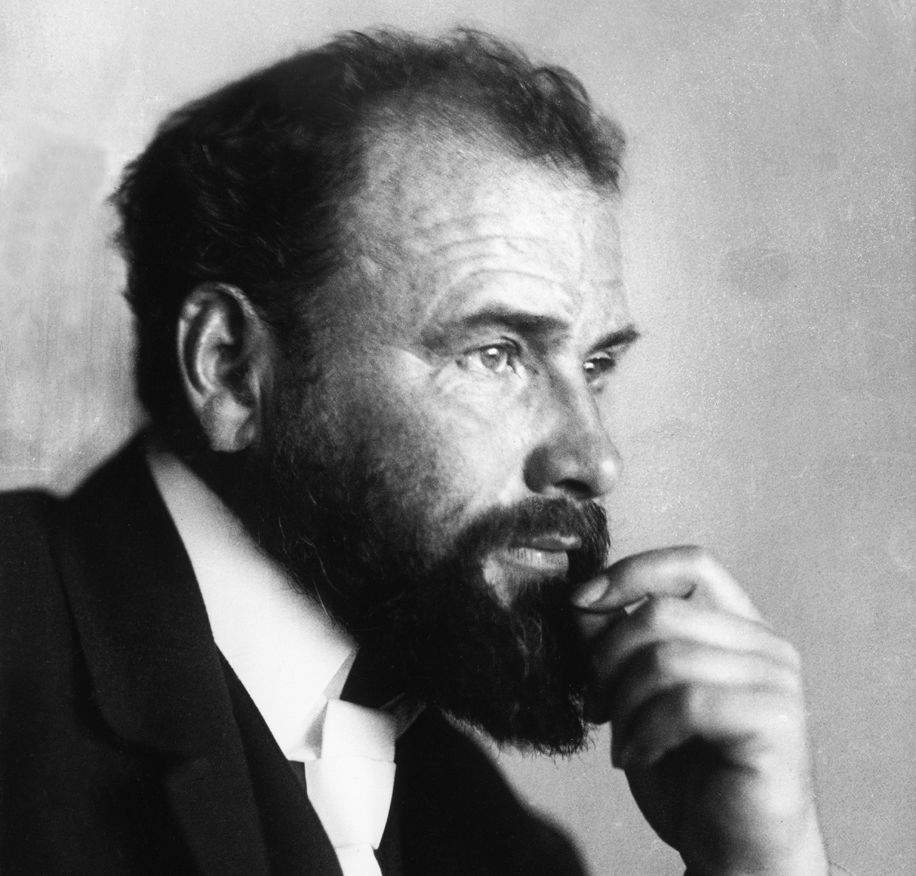
Studie zum Bildnis 'Eugenia Primavesi' (nach links stehend, rechts Wiederholung der Hände und des Kleiderumrisses) 1912 Studienblatt mit stehender Dame, Vorder- und Rückenansicht, Studie für 'Adele Bloch-Bauer II' 1912 Bildnis der Eugenia Primavesi 1913 Die Jungfrau 1913 Italienische Gartenlandschaft 1913 Kirche in Cassone 1913 Liegende mit gespreizten Beinen 1913 Malcesine am Gardasee 1913 Porträtfoto von Gustav Klimt
Sitzender Rückenakt nach rechts (Studie für 'Die Jungfrau') 1913 Zwei sich umarmende junge Mädchen 1913 Bildnis Elisabeth Baronin Bachofen-Echt 1914 Liebespaar 1914 Liegende Frau 1914 Liegender Halbakt nach links 1914 Litzlberg am Attersee 1914 Porträtfoto von Gustav Klimt Studie für das Bildnis 'Amalie Zuckerkandl' (auf dem Sofa sitzend) 1914
Bildnis der Barbara Flöge (Mutter der Emilie Flöge) 1915 Bildnis der Charlotte Pulitzer 1915 Brustbild einer Frau 1915 Damenbrustbild im Dreiviertelprofil 1915 Litzlbergkeller am Attersee 1915 Mädchenkopf im Dreiviertelprofil 1915 Rückenansicht einer liegenden Frau 1915 Sitzende Dame von vorne (Studie für das Bildnis Friederike Beer-Monti) 1915 Studie für das Bildnis 'Friederike Beer-Monti' (sitzend von vorne) 1915
Studie für das Bildnis 'Friederike Beer-Monti' (stehend, von vorne) 1915 Studie für das Bildnis 'Friederike Beer-Monti' 1915 Tod und Leben 1915 Zusammengekauerter Halbakt 1915 Apfelbaum II 1916 Backfisch 1916 Bildnis der Friederike Maria Beer 1916 Bildnis der Wally 1916 Brustbild einer Frau 1916
Brustbild einer Frau 1916 Brustbild einer Frau 1916 Dame mit Muff 1916 Der Iltispelz (unvollendet) 1916 Der Pelzkragen 1916 Die Freundinnen 1916 Die Tänzerin (vorher Ria Munk II) 1916 Frauenkopf von vorne 1916 Gartenweg mit Hühnern 1916
Halbakt mit teilweise verdecktem Gesicht und Handskizze, Studie für 'Die Braut' 1916 Häuser in Unterach am Attersee 1916 Kirche in Unterach am Attersee 1916 Kniestück im Profil nach rechts 1916 Liegender Halbakt, die Arme hinter dem Kopf verschränkt 1916 Mädchenkopf nach links 1916 Männerkopf nach links geneigt 1916 Porträt einer sitzenden Dame mit Boa, Studie für 'Der Iltispelz' 1916 Schönbrunner Schlosspark 1916
Stehender weiblicher Akt und Männergestalt, Studie für 'Adam und Eva' 1916 Weiblicher Akt, auf dem Rücken liegend 1916 Zurückgelehnt liegende Dame, Studie für 'Der Iltispelz' 1916 Adam und Eva (unvollendet) 1917 Baby 1917 Bildnis der Amalie Zuckerkandl (unvollendet) 1917 Bildnis der Johanna Staude (unvollendet) 1917 Bildnis Margarethe Constance Lieser 1917 Damenbildnis in weiss (unvollendet) 1917
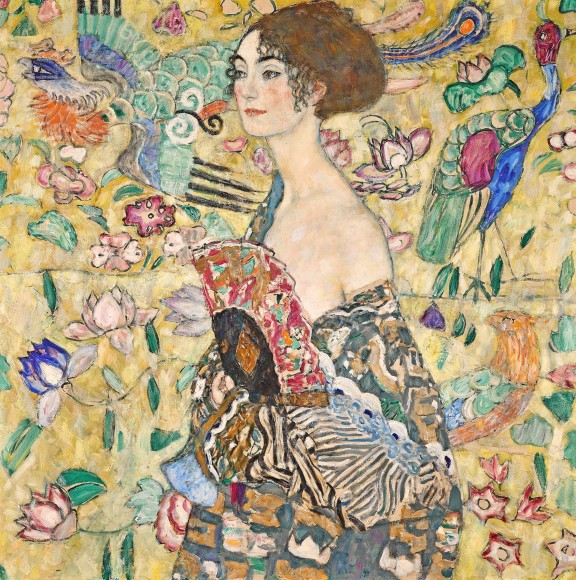
Die Braut (unvollendet) 1917 Frau mit Fächer 1917 Gartenlandschaft mit Bergkuppe 1916 Gastein 1917 Halbbildnis einer Dame von vorne (Studie zum Bildnis Johanna Staude) 1917 Holzknechthaus in Weissenbach 1916 Kauernde nach rechts, Studie für 'Leda' 1917 Leda 1917 Liegende Frau 1917
Liegende mit abgewinkelten Armen 1917 Liegender Akt nach links das linke Bein aufgestellt 1917 Mädchenakt mit erhobenen Armen 1917 Mädchenakt mit weißem Schleier 1917 Portrait einer Dame, en face (unvollendet) 1917 Rückenansicht einer liegenden Frau 1917 Schlafendes Mädchen mit langen Zöpfen, den Kopf nach links geneigt 1917 Sitzende nach links 1917 Sitzender Halbakt mit gespreizten Schenkeln und verdecktem Gesicht (Studie für 'Die Braut') 1917
Stehende Tänzerin, den Kopf zur Seite gewendet (Studie für 'Die Tänzerin') 1917 Stehende, in Tücher gehüllt 1917 Stehender Halbakt von vorne mit erhobenen Unterarmen 1917 Unterach am Attersee 1916 Bildnis der Ria Munk III 1918
 
  • Contact
  • Imprint
  • Sitemap
  • Terms of Use
Copyright ©2013 LAKS GmbH. All rights reserved. |  Gustav Klimt Paintings
Follow klimt.com

Newsletter sign-up Sign up to our newsletter for unique offers and the latest news on products, rides and events