
KLIMT.com - the virtual Gustav Klimt - MuseumKlimt.com is virtual Klimt Museum displaying paintings by Gustav Klimt, Gustav Klimt drawings, study drawings by Gustav Klimt, Klimt portrait paintings, Early and Late Klimt Artworks and Klimt photographs.

  • Gallery
    • Early Works
    • Beethoven-Frieze
    • Stoclet-Frieze
    • Landscapes
    • Lake Attersee
    • Women
    • Late Works
    • Drawings 1
    • Drawings 2
    • Photographies
  • Biography
    • 1862 - 1890
    • 1891 - 1898
    • 1899 - 1910
    • 1911 - 1918
    • 1918 - 2012
  • Vienna
    • About Vienna
    • Exhibitions
    • Eat and Drink
  • Products
  • Contact

Biography

  • ALL
  • 1862 - 1890
  • 1891 - 1898
  • 1899 - 1910
  • 1911 - 1918
  • 1918 - 2012

Sitzender Halbakt (Studie für 'Salome') 1908

Seated semi-nude (Study for "Salome")

The account of the beheading of Holofernes by Judith is given in the deuterocanonical book of Judith, and is the subject of numerous depictions in painting and sculpture. In the story, Judith, a beautiful widow, is able to enter the tent of Holofernes because of his desire for her. Holofernes was an Assyria|Assyrian general who was about to destroy Judith's home, the city of Bethulia, though the story is emphatic that no "defilement" takes place. Overcome with drink, he passes out and is Decapitation|decapitated by Judith; his head is taken away in a basket (often depicted as carried by an elderly female servant). Artists have mainly chosen one of two possible scenes (with or without the servant): the decapitation, with Holofernes prone on the bed, or the heroine holding or carrying the head. An exception is an early sixteenth-century stained glass window with two scenes. The central scene, by far the largest of the two, features Judith and Holofernes seated at a banquet. The smaller background scene has Judith and her servant stick Holofernes' head in a sack, the headless body standing behind with his arm waving helplessly. In European art, Judith is very often accompanied by her maid at her shoulder, which helps to distinguish her from Salome, who also carries her victim's head on a silver charger (plate). However, a Northern tradition developed whereby Judith had both a maid and a charger, famously taken by Erwin Panofsky as an example of the knowledge needed in the study of iconography. For many artists and scholars, Judith's sexualized femininity interestingly and sometimes contradictorily combined with her masculine aggression. Judith was one of the virtuous women whom Van Beverwijck mentioned in his published apology (1639) for the superiority of women to men,Loughman & J.M. Montias (1999) Public and Private Spaces. Works of Art in Seventeenth-Century Dutch Houses, p. 81. and a common example of the Power of Women iconographic theme in the Northern Renaissance.

Background in early Christianity
The Book of Judith was accepted by Jerome as canonical and accepted in the Vulgate, and thus images of Judith were as acceptable as those of other scriptural women. In early Christianity, however, images of Judith were far from sexual or violent: she was usually depicted as "a type of the praying Virgin or the church or as a figure who tramples Satan and harrows Hell," that is, in a way that betrayed no sexual ambivalence: "the figure of Judith herself remained unmoved and unreal, separated from real sexual images and thus protected."

Renaissance depictions
Judith and Holofernes (Donatello)|Judith and Holofernes, the famous bronze sculpture by Donatello, bears the implied allegorical subtext that was inescapable in Early Renaissance Florence, that of the courage of the Medieval commune|commune against tyranny. In the late Renaissance Judith changed considerably, a change described as a "fall from grace"--from an image of Mary (mother of Jesus)|Mary she turns into a figure of Eve. Early Renaissance images of Judith tend to depict her as fully dressed and desexualized; besides Donatello's sculpture, this is the Judith seen in Sandro Botticelli's The Return of Judith to Bethulia (1470-1472), Andrea Mantegna's Judith and Holofernes (Mantegna)|Judith and Holofernes (1495, with a detached head)), and in the corner of Michelangelo's Sistine chapel (1508-1512). Later Renaissance artists, notably Lucas Cranach the Elder, who with his workshop painted at least eight Judiths, showed a more sexualized Judith, a "seducer-assassin": "the very clothes that had been introduced into the iconography to stress her chastity become sexually charged as she exposes the gory head to the shocked but fascinated viewer," in the words of art critic Jonathan Jones (journalist)|Jonathan Jones. This transition, from a desexualized image of Virtue to a more sexual and aggressive woman, is signaled in Giorgione's Judith (Giorgione)|Judith (c. 1505): "Giorgione shows the heroic instance, the triumph of victory by Judith stepping on Holofernes's severed, decaying head. But the emblem of Virtue is flawed, for the one bare leg appearing through a special slit in the dress evokes eroticism, indicates ambiguity and is thus a first allusion to Judith's future reversals from Mary to Eve, from warrior to femme fatale." Other Italian painters of the Renaissance who painted the theme include Botticelli, Titian, and Paolo Veronese. Especially in Germany an interest developed in female "worthies" and heroines, to match the traditional male sets. Subjects combining sex and violence were also popular with collectors. Like Lucretia, Judith was the subject of a disproportionate number of old master prints, sometimes shown nude. Barthel Beham engraved three compositions of the subject, and other of the "Little Masters" did several more. Jacopo de' Barberi, Girolamo Mocetto (after a design by Andrea Mantegna), and Parmigianino also made prints of the subject.

Baroque depictions
Judith remained popular in the Baroque period, but around 1600 images of Judith began to take on a more violent character, "and Judith became a threatening character to artist and viewer." Italian painters including Caravaggio, Leonello Spada, and Bartolomeo Manfredi depicted Judith and Holofernes; and in the north, Rembrandt, Peter Paul Rubens, and Eglon van der Neer used the story. The influential composition by Cristofano Allori (c. 1613 onwards), which exists in several versions, copied a conceit of Caravaggio's recent David with the Head of Goliath; Holofernes' head is a portrait of the artist, Judith is his ex-mistress, and the maid her mother. In Artemisia Gentileschi's painting Judith Slaying Holofernes (Naples) it is Judith who is the self-portrait, while Holofernes resembles her rapist Agostino Tassi. Like Caravaggio in his Judith Beheading Holofernes (Caravaggio)|Judith Slaying Holofernes of 1612 she chooses to show the actual moment of the killing. A different composition in the Pitti Palace in Florence shows a more traditional scene with the head in a basket. While many of the above paintings resulted from private patronage, important paintings and cycles were made also by church commission and were made to promote a new allegorical reading of the story--that Judith defeats Protestant heresy. This is the period of the Counter-Reformation, and many images (including a fresco cycle in the Lateran Palace commissioned by Pope Sixtus V and designed by Giovanni Guerra and Cesare Nebbia) "proclaim her rhetorical appropriation by the Catholic or Counter-Reformation Church against the 'heresies' of Protestantism. Judith saved her people by vanquishing an adversary she described as not just one heathen but 'all unbelievers' (Jdt 13:27); she thus stood as an ideal agent of anti-heretical propaganda." When Rubens began commissioning reproductive prints of his work, the first was an engraving by Cornelius Galle, done "somewhat clumsily," of his violent Judith Slaying Holofernes (1606-1610). Other prints were made by such artists as Jacques Callot.

Modern depictions
The allegorical and exciting nature of the Judith and Holofernes scene continues to inspire artists. In the late nineteenth century, Jean Charles Cazin made a series of five paintings tracing the narrative and giving it a conventional, nineteenth-century ending; the final painting shows her "in her honored old age," and "we shall see her sitting in her house spinning." p. 830. Two notable paintings of Judith were made by Gustav Klimt. The story was quite popular with Klimt and his contemporaries, and he painted Judith I in 1901, as a dreamy and sensual woman with open shirt. His Judith II (1909) is "less erotic and more frightening." The two "suggest 'a crisis of the male ego,' fears and violent fantasies all entangled with an eroticized death, which women and sexuality aroused in at least some men around the turn of the century." Modern paintings of the scene often cast Judith nude, as was signaled already by Klimt. Franz Stuck's 1928 Judith has "the deliverer of her people" standing naked and holding a sword besides the couch on which Holofernes, half-covered by blue sheets--where the text portrays her as god-fearing and chaste, "Franz von Stuck's Judith becomes, in dazzling nudity, the epitome of depraved seduction". In 1997, Russian artists Vitaliy Komar and Alexander Melamed produced a Judith on the Red Square which "casts Lenin in the Holofernes role, conquered by a young Russian girl who contemplates his severed head with a mixture of curiosity and satisfaction." In 1999, American artist Tina Blondell rendered Judith in watercolor; her I'll Make You Shorter by a Head is explicitly inspired by Klimt's Judith I, and part of a series of paintings called Fallen Angels.Sarah Henrich, "Living on the Outside of Your Skin: Gustav Klimt and Tina Blondell Show Us Judith," in

1899 - 1910
back to overview previous picture next picture

Pictures between 1899 and 1910


Bildnis der Serena Lederer 1899 Detailstudie eines Liebespaares, sitzender männlicher Rückenakt (Studie für 'Philosophie') 1899 Kühe im Stall 1899 Mädchen mit langen Haaren 1899 Nach dem Regen (Garten mit Hühnern in St.Agatha) 1898 Nixen (Silberfische) 1899 Nuda Veritas 1899 Obstgarten am Abend 1899 Philosophie 1899
Schubert am Klavier 1899 Alter Mann auf dem Totenbett 1900 Attersee 1900 Aufgestützt sitzender weiblicher Akt, zwei ringende Männer (Studien für 'Medizin') 1900 Bauernhaus mit Birken 1900 Bildnis der Rose von Rosthorn-Friedmann 1900 Der schwarze Stier 1900 Der Sumpf 1900 Die Große Pappel I 1900
Fünf Studien eines schlafenden Kindes (Studien für 'Medizin') 1900 Hygieia (Detail aus Medizin) 1900 Kopf eines alten Mannes, Fragment eines weiblichen Oberkörpers, weiblicher Rückenakt (Studien für 'Medizin') 1900 Sitzender männlicher Rückenakt (Studie für 'Medizin'), Elefant, Aesculap 1900 Sitzender männlicher Rückenakt, Detailstudie von Ringenden (Studie für 'Medizin') 1900 Stehende Dame, auf einen Lehnstuhl gestützt (Studie für das Bildnis Rose von Rosthorn-Friedmann) 1900 Weiblicher Rückenakt, verzweifelter alter Mann (Studien für 'Medizin') 1900 Zwei ringende Männer (Detailstudie für 'Medizin') 1900 Zwei ringende Männer (Studie für 'Medizin') 1900
Zwei Ringende Männer (Zwei Skizzen und Detailstudie für 'Medizin') 1900 Zwei Skelettstudien (Studie für 'Medizin') 1900 Zwei Studien eines ringenden Männerpaares (Studie für 'Medizin') 1900 Bauernhaus in Kammer am Attersee (Mühle) 1901 Bildnis der Marie Henneberg 1901 Frauenakt 1901 Goldfische 1901 Insel im Attersee 1902 Judith I (und der Kopf des Holofernes) 1901
Obstbäume 1901 Studie einer bekleideten Frau mit gefalteten Händen zum 'Mitleid' im Beethovenfries 1901 Studie für die linke der 'Drei Gorgonen' im Beethovenfries 1901 Studie für die linke der Gorgonen im Beethovenfries 1901 Studie für die linke Figur der drei Gorgonen im Beethovenfries 1901 Studie für die rechte Figur der drei Grogonen im Beethovenfries 1901 Studie zur 'Poesie' im Beethovenfries 1901 Tannenwald I 1901 Tannenwald II 1901
Zwei Kompositionsskizzen für die Gruppe der drei Gorgonen im Beethovenfries 1901 Zwei Studien eines sitzenden weiblichen Rückenaktes 1901 Akt einer Schwangeren im Profil, Wiederholung der Figur (Studie für 'Hoffung I') 1902 Beethoven Fries - Der wohlgerüstete Starke, Mitleid und Ehrgeiz 1902 Beethoven Fries - Die feindlichen Gewalten (Der nagende Hunger) 1902 Beethoven Fries - Die feindlichen Gewalten (Die drei Gorgonen: Krankheit, Wahnsinn, Tod) 1902 Beethoven Fries - Die feindlichen Gewalten (Kopf des Typhoeus) 1902 Beethoven Fries - Die feindlichen Gewalten (Unkeuschheit, Wollust und Unmäßigkeit) 1902 Beethoven Fries - Die feindlichen Gewalten 1902
Beethoven Fries - Die feindlichen Gewalten 1902 Beethoven Fries - Die Künste 1902 Beethoven Fries - Die Künste, Paradieschor, Umarmung 1902 Beethoven Fries - Die Leiden der schwachen Menschheit Beethoven Fries - Die Leiden der schwachen Menschheit (Flehendes Mädchen) Beethoven Fries - Die Leiden der schwachen Menschheit (Kniendes Paar) Beethoven Fries - Die Sehnsucht nach Glück (Poesie) Beethoven Fries - Freude schöner Götterfunken (Diesen Kuss der ganzen Welt) Beethoven Fries - Paradieschor 1902
Beethoven Fries 1902 Bildnis der Emilie Flöge 1902 Bildnis der Gertha Felsövanyi 1902 Buchenwald I 1902 Frauenkopf, nach links geneigt, die Hände an die Wange gelegt (Studie für 'Jurisprudenz') 1902 Mädchenakt von vorne 1902 Seitenansicht eines bekleideten Skeletts (Studie für 'Hoffnung I') 1902 Sitzender männlicher Rückenakt (Studie für 'Medizin') 1902 Stehender Akt eines jungen Mädchens, Figurenstudie für 'Die schwache Menschheit' im Beethoven Fries 1902
Stehender Frauenakt nach links und Frauenakt von vorne 1902 Stehender Frauenakt von vorne, Studie für eine Gorgonenfigur im Beethoven Fries 1902 Studie eines Frauenkopfes im Drieviertelprofil (Studie für Unkeuschheit im Beethovenfries) 1902 Studie für 'Hygieia' in 'Medizin' 1902 Studie für das Liebespaar im Beethovenfries 1902 Studie für die Figur 'Nagender Kummer' im Beethovenfries 1902 Studie für die linke der 'Drei Gorgonen' im Beethovenfries 1902 Studie zu Irrlichter 1902 Studie zum knienden Männerakt der 'Schwachen Menschheit' im Beethovenfries 1902
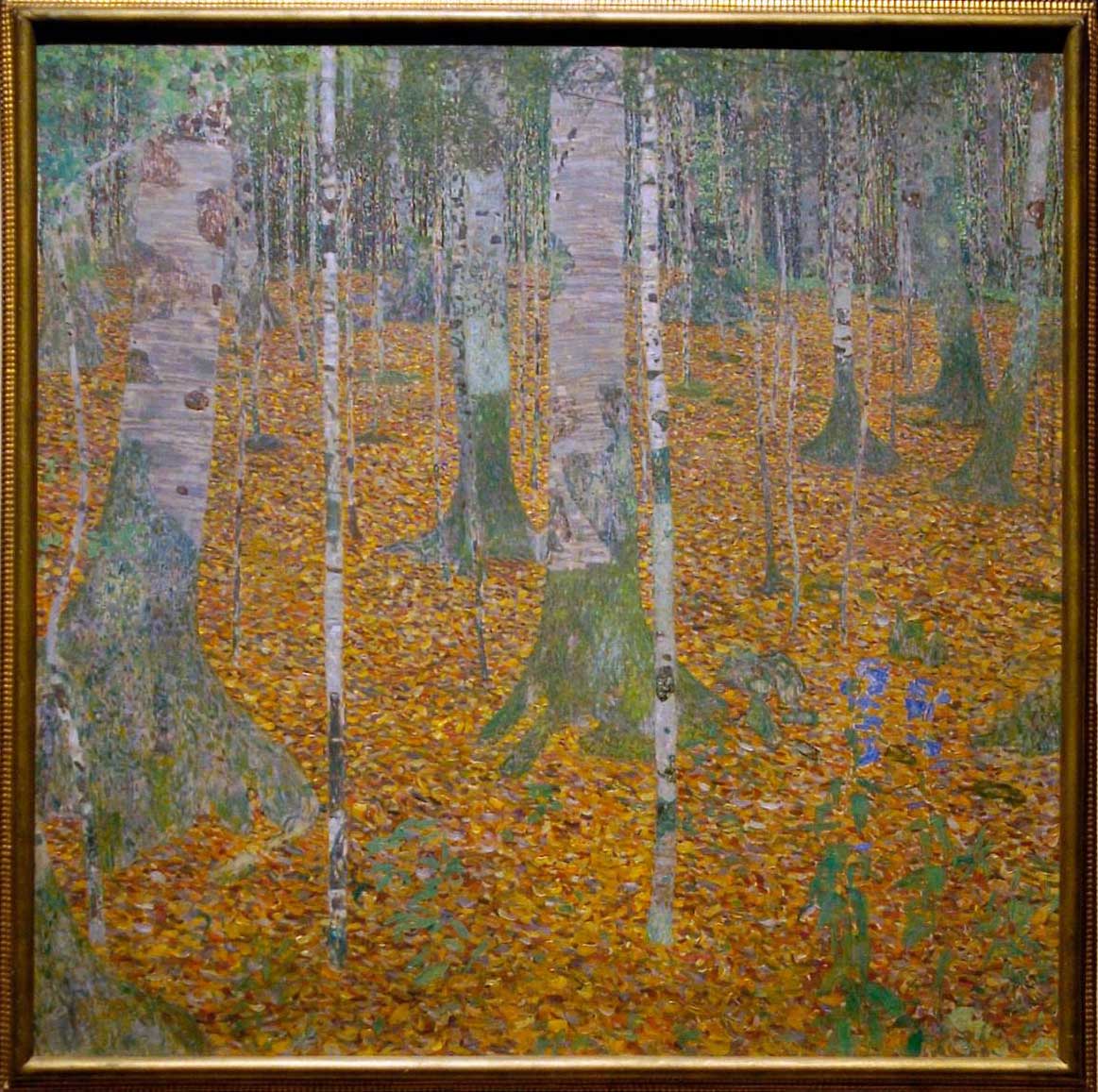
Studie zur 'Poesie' im Beethovenfries 1902 Zwei Studien für die schwebenden Gestalten der 'Sehnsucht nach Glück' im Beethovenfries 1902 Bildnis der Hermine Gallia 1903 Birkenwald I 1903 Birnbaum 1903 Buchenwald II 1903 Daphne (vorher Mädchen mit blauem Schleier) 1903 Das Leben ein Kampf (Der Goldene Ritter) 1903 Die Grosse Pappel II (Aufsteigendes Gewitter) 1903
Die Hoffnung I 1903 Goldener Apfelbaum 1903 Gustav Klimt, Secession, XVIII. Ausstellung 1903 Irrlichter 1903 Jurisprudenz 1903 Kniestück eines Mannes in langem Gewand nach rechts 1903 Kostümstudie für 'Kirchliche Musik' im Stadttheater in Fiume 1903 Sitzende Dame im Fauteuil, Studie für das Porträt 'Adele Bloch-Bauer' 1903 Stehende alte Frau im Profil nach links 1903
Stehende Dame in Straßentoilette nach links 1903 Stehende mit Schwert in der erhobenen Rechten 1903 Studie für das Porträt 'Adele Bloch-Bauer I' 1903 Zug der Toten 1903 Zwei Studien einer sitzenden Dame im langen Kleid, Studie für das Bildnis 'Adele Bloch-Bauer' 1903 Blumenwiese 1904 Gustav Klimt am Attersee Halbakt eines Mädchens in Hosen 1904 Kleines Kind, von zwei Händen gehalten (Figur- und Detailstudien für 'Die Drei Lebensalter') 1904
Klimt und Flöge am Attersee mit Fritz Paulik Liegender Halbakt (Studie für 'Wasserschlangen II', 1. Zustand) 1904 Liegender Halbakt mit erhobenem rechten Bein 1904 Mann mit langem Gewand von vorne 1904 Mann mit Toga sich verneigend 1904 Mutter mit Kind (Studie und Detailskizze für 'Die Drei Lebensalter') 1904 Profilbildnis einer Frau mit Hut 1904 Rose 1904 Ruhender Halbakt 1904
Schwangere mit Mann 1904 Sitzende alte Frau 1904 Sitzende Dame (Studie für das Bildnis Fritza Riedler) 1904 Sitzender Akt mit langem Haar und schleierartigen Gewand 1904 Sitzender weiblicher Halbakt nach links 1904 Stehende ältere Frau im Profil (Studie für 'Die drei Lebensalter') 1904 Stehende Dame mit herabhängenden Armen (Studie für das Bildnis Margarethe Stonborough-Wittgenstein) 1904 Stehende Dame mit Umhang (Studie zum Bildnis Margaret Stonborough-Wittgenstein) 1904 Stehende Dame, die Hände ineinandergelegt (Studie für das Bildnis Margarethe Stonborough-Wittgenstein) 1904
Stehender Mann, eine Last tragend 1904 Studie eines hochgehaltenen schlafenden Kindes (Studie für 'Die drei Lebensalter') 1904 Studie für das Bildnis von Magda Mautner-Markhof 1904 Wasserschlangen I 1904 Wasserschlangen II 1904 Zwei sich umarmende Mädchen, Figurenstudie zu 'Wasserschlangen I' 1904 Zwei Studien eines hochgehaltenen Kindes (Studie für 'Die drei Lebensalter') 1904 Zwei Studien eines Säuglings (Studien für 'Die drei Lebensalter') 1904 Bauerngarten (Blumengarten) 1905
Bildnis der Margaret Stonborough-Wittgenstein 1905 Blumenwiese in Litzlberg 1905 Die drei Lebensalter der Frau 1905 Liegender weiblicher Halbakt 1905 Sitzende alte Frau im Profil nach links 1905 Stehender Frauenakt mit erhobenem rechten Arm 1905 Stehender Frauenakt mit erhobenen Armen 1905 Stoclet Fries - Die Erfüllung 1905 Stoclet Fries - Die Erwartung 1905
Stoclet Fries - Lebensbaum 1905 Stoclet Fries - Ritter 1905 Stoclet Fries 1905 Weiblicher Akt mit angezogenen Schenkeln, Studie für 'Danae' 1905 Zwei auf dem Bauch liegende Aktfiguren (Studie für 'Wasserschlangen II') 1905 Bauerngarten mit Sonnenblumen 1906 Bildnis der Fritza Riedler 1906 Brustbild einer Dame nach unten blickend 1906 Die Sonnenblume 1906
Emilie Flöge Emilie Flöge Emilie Flöge Freundinnen in Umarmung 1906 Halbakt, einer nach rechts Schreitenden, Studie für 'Stoclet Fries' 1906 Im Profil stehende weibliche Figur mit erhobenen Armen, Studie für 'Die Erwartung' im 'Stoclet Fries' 1906 Kniender Akt einer alten Frau etwas nach rechts 1906 Liegender weiblicher Akt 1906 Mutter und Kind 1906
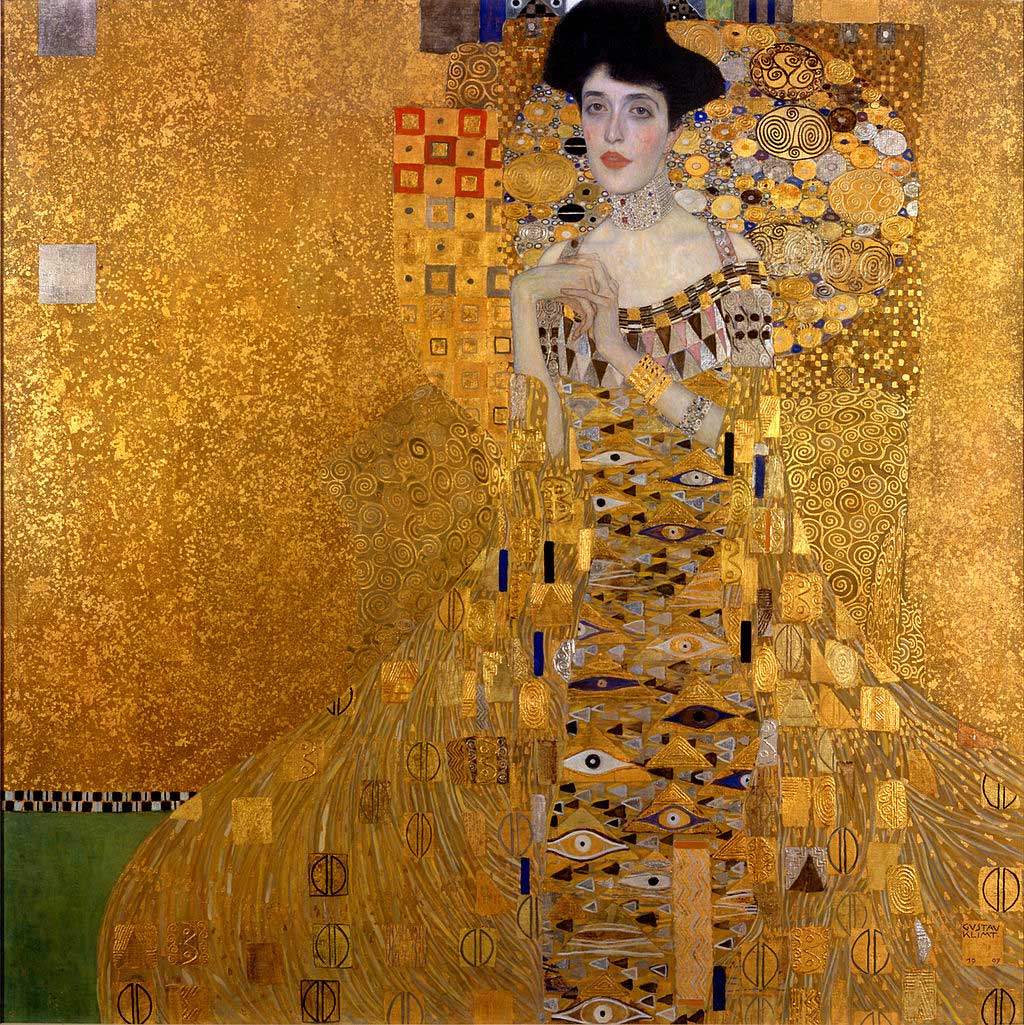
Schreitender Mädchenakt 1906 Stehender Frauenakt mit erhobenen Armen 1906 Zwei liegende Rückenakte 1906 Bildnis der Adele Bloch-Bauer I 1907 Blasses Gesicht 1907 Brustbild eines Mannes von vorne 1907 Damenbildnis in Rot und Schwarz 1907 Danae 1907 Die Hoffnung II 1907
Die Schwestern 1907 Drei Studien einer stehenden Frau nach rechts 1907 Etwas nach links stehender Akt 1907 Gebeugter nackter Greis nach rechts 1907 Halbbildnis einer Dame in Schwarz mit Federhut 1907 Kniende Frau, sich an stehenden Mann anschmiegend, im Profil, Studie für 'Der Kuss' 1907 Mohnwiese 1907 Profilansicht einer lesenden Frau 1907 Sitzender Frauenakt 1907
Sitzender Mädchenakt nach links 1907 Stehende Schwangere in getupftem Kleid (Studie für 'Hoffnung II') 1907 Stehender Akt einer Schwangeren (Studie für 'Hoffnung II') 1907 Stehender männlicher Akt, Studie für 'Philosophie' 1907 Stehendes Liebespaar in Seitenansicht (Studie für 'Der Kuss') 1907 Studie einer Tänzerin zur 'Erwartung' im Stoclet-Fries 1907 Studie zu Danae 1907 Tänzerin mit erhobenem Beim, rechts Wiederholung der Figur 1907 Zwei Kopfstudien, Studie für die männliche Figur in 'Der Kuss' 1907
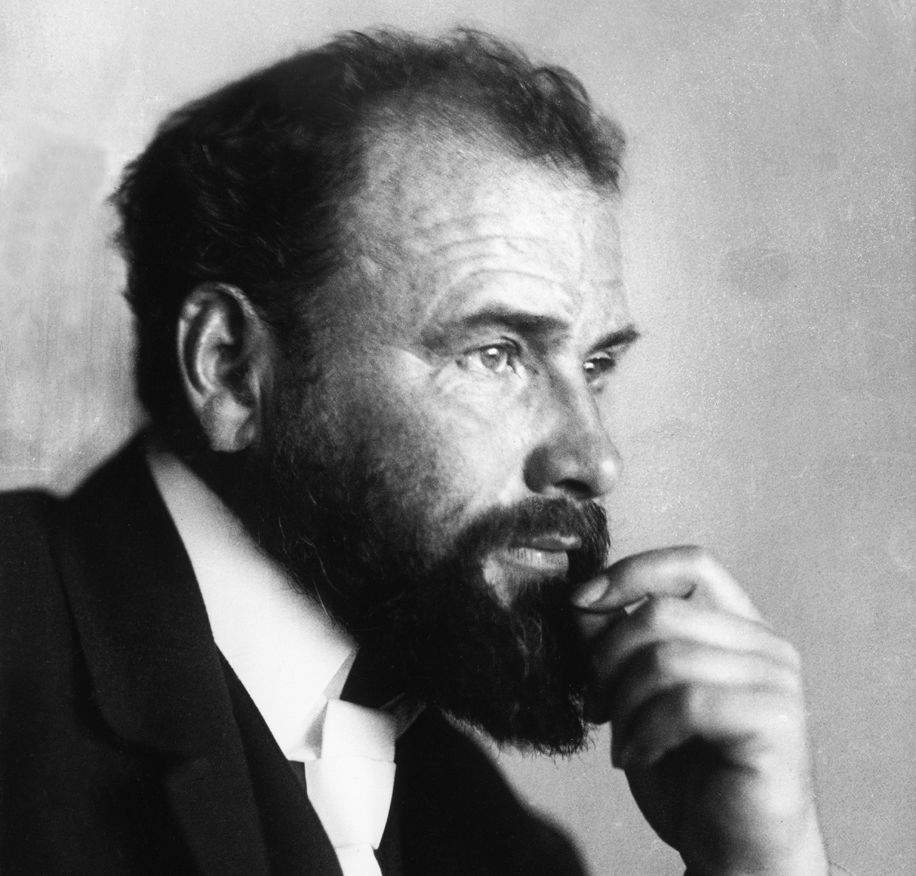
Der Kuss 1908 Gesenkter Männerkopf (Studie für 'Tod und Leben') 1908 Kopf einer alten Frau von vorne (Studie für 'Tod und Leben') 1908 Lesendes Mädchen 1908 Lesendes Mädchen 1908 Porträtfoto von Gustav Klimt Schloss Kammer am Attersee I (Wasserschloss) 1908 Sitzende im Profil 1908 Sitzender Halbakt (Studie für 'Salome') 1908
Studie zum Gemälde JudithII 1908 Alte Frau 1909 Aufgestützt Liegende mit hochgerafftem Kleid 1909 Dame mit Hut und Federboa 1909 Die Familie 1909 Emilie Flöge 1909 Judith II (Salome) 1909 Klimt und Flöge Kopf einer alten Frau im Profil, Studie für 'Tod und Leben' 1909
Sitzende von vorn, Studie für 'Judith II' 1909 Sitzender weiblicher Akt 1909 Weiblicher Akt aufgestützt liegend 1909 Zwei liegende weibliche Akte 1909 Dame mit Rosenhut 1910 Der Park 1910 Der Schwarze Federhut 1910 Dicke sitzende Frau im Vordergrund, hinter ihr zwei Liegende 1910 Gustav Klimt
Gustav Klimt Mit gegraetschten Beinen sitzender Halbakt 1910 Schloss Kammer am Attersee II 1909 Schloss Kammer am Attersee III 1910 Schloss Kammer am Attersee IV 1910 Sitzender Akt von vorne 1910 Stehende Dame von vorne (Studie für das Bildnis 'Adele Bloch-Bauer II') 1910
 
  • Contact
  • Imprint
  • Sitemap
  • Terms of Use
Copyright ©2013 LAKS GmbH. All rights reserved. |  Gustav Klimt Paintings
Follow klimt.com

Newsletter sign-up Sign up to our newsletter for unique offers and the latest news on products, rides and events